Which 3D prints are worth selling: material, time and value
How much material popular products use, why small personalized items often earn more than large prints, and what to check before you add a product.
Updated 2026-11-05
Material per product
The table below lists the solid weight of the default model of a few products on this site, measured from the generated file on 5 November 2026. Solid means 100% infill, so a normal print weighs less. The ratios between products are what matter here.
- Zipper pull: about 2 g.
- Cookie cutter: about 4 g.
- Name keychain: about 5 g.
- Plant label: about 5 g.
- Dice: about 5 g each.
- Illustrated name sign: about 14 g.
- Christmas ornament: about 16 g.
- Flexi name: about 29 g.
- Name dragon: about 35 g.
- Custom box: about 44 g.
- Phone stand: about 104 g.
- Birth letter sign: about 670 g, as a solid block. Printed with sparse infill it is far lighter, but still the largest item here.
Small and personal often beats large
A name keychain uses about 5 grams: a few cents of filament. Its value comes from the name on it, not from the plastic. A large sign uses a hundred times more material and prints for many hours, but buyers don't always pay a hundred times more. That makes small personalized items attractive: low material cost, short print time, several on one plate, and a price set by the gift, not by the weight.
Large items still have their place, for example a birth sign or a house number that people buy once for a special moment. Price them by printer hours as well as material, and make sure the print time fits your capacity.
Count the plate, not the item
Your printer's time is limited. A plate with twelve keychains takes about as much handling as a plate with one, so the time per item drops a lot. When you compare products, compare what one full plate earns per hour of printing and per minute of your handling. A product that fills a plate well and needs no supports is easier to sell at a profit.
Watch the hidden time
- Personalized items need a message with the buyer and a spelling check.
- Multi-color items take longer and waste filament on every color change.
- Moving parts, such as a flexi name or an articulated dragon, need to be freed and checked after printing.
- Parts that must fit something, such as a holder or an adapter, may need a test print for each buyer.
Before you add a product
- May you sell it? Check the license of the design and the rules of the place you sell, see where to sell 3D prints.
- Is it a toy for children? In the EU, toys need a CE marking and a safety assessment.
- What does it cost in full, and what does it sell for after fees? See how to price 3D prints.
- Does it fit your printer, your colors and your stock?
- Can you photograph it well, so the listing shows what the buyer gets?
Make it
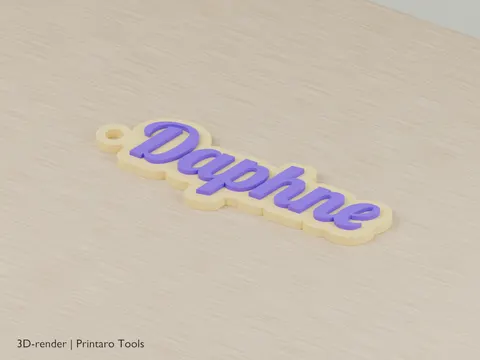
Name Keychain
A keychain in the shape of the name itself
3D renderPersonalization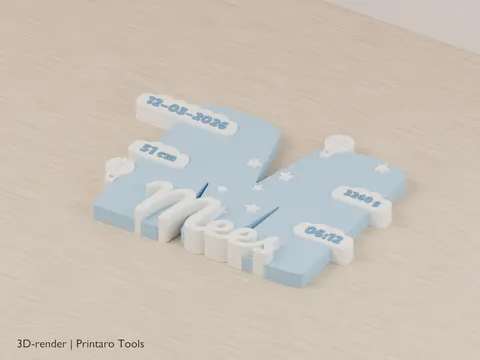
Birth Letter Sign
A standing initial with the birth details on clouds
3D renderBaby & Birth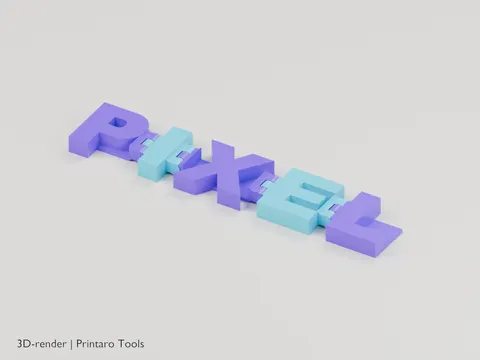
Flexi Name
Your name as hinged letters that fold and wiggle
3D renderGames & Hobby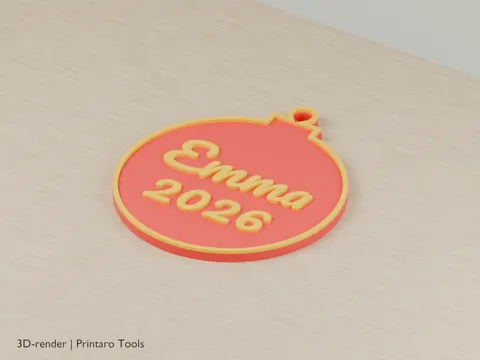
Christmas Ornament
Ornaments with a name and year
3D renderPersonalization