Propeller Generator
Propellers and fan rotors with two to eight blades
Design a propeller or fan rotor and download it as an STL. Choose 2 to 8 blades, a diameter from 30 to 250 mm, the pitch and blade width, and a round, D-shaft or hex bore for your motor or shaft. For toys, model boats, wind spinners and airflow experiments.
Examples
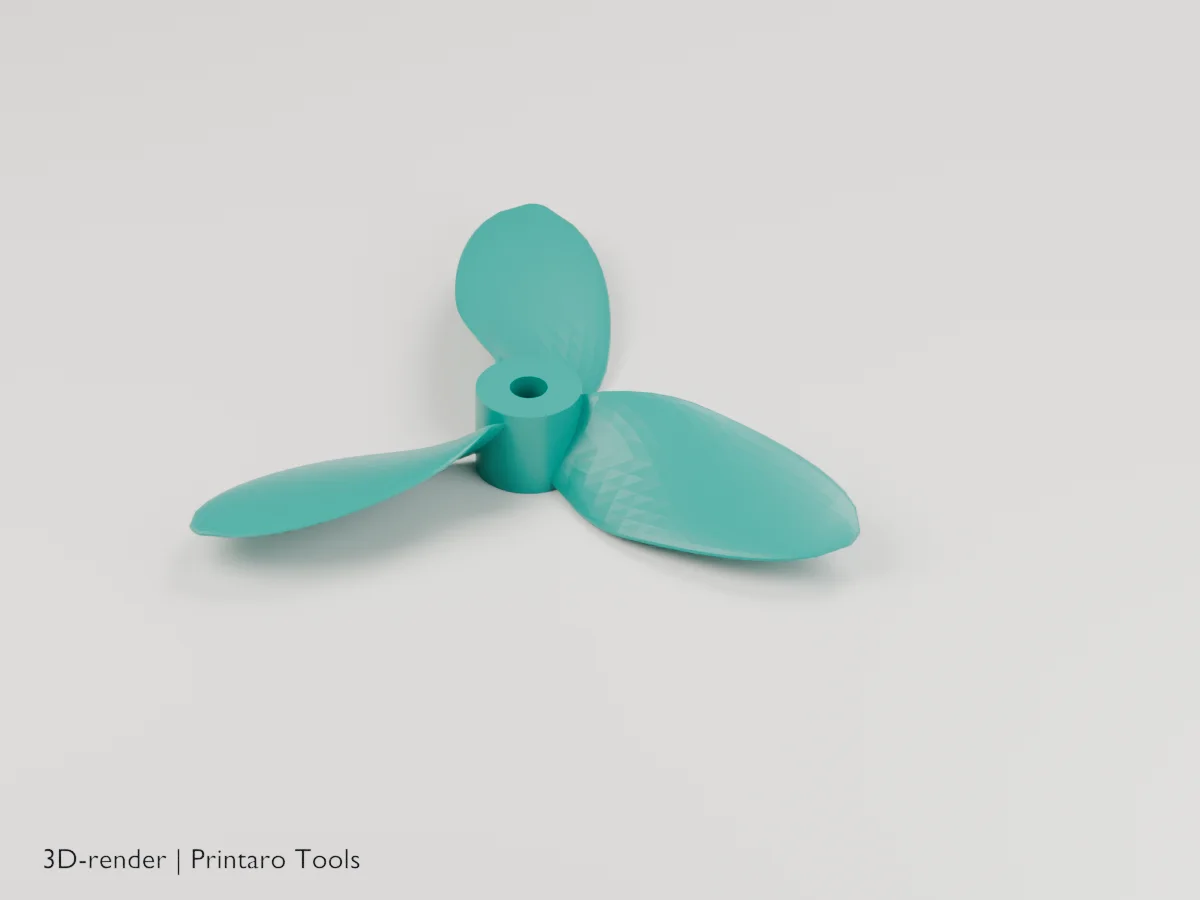
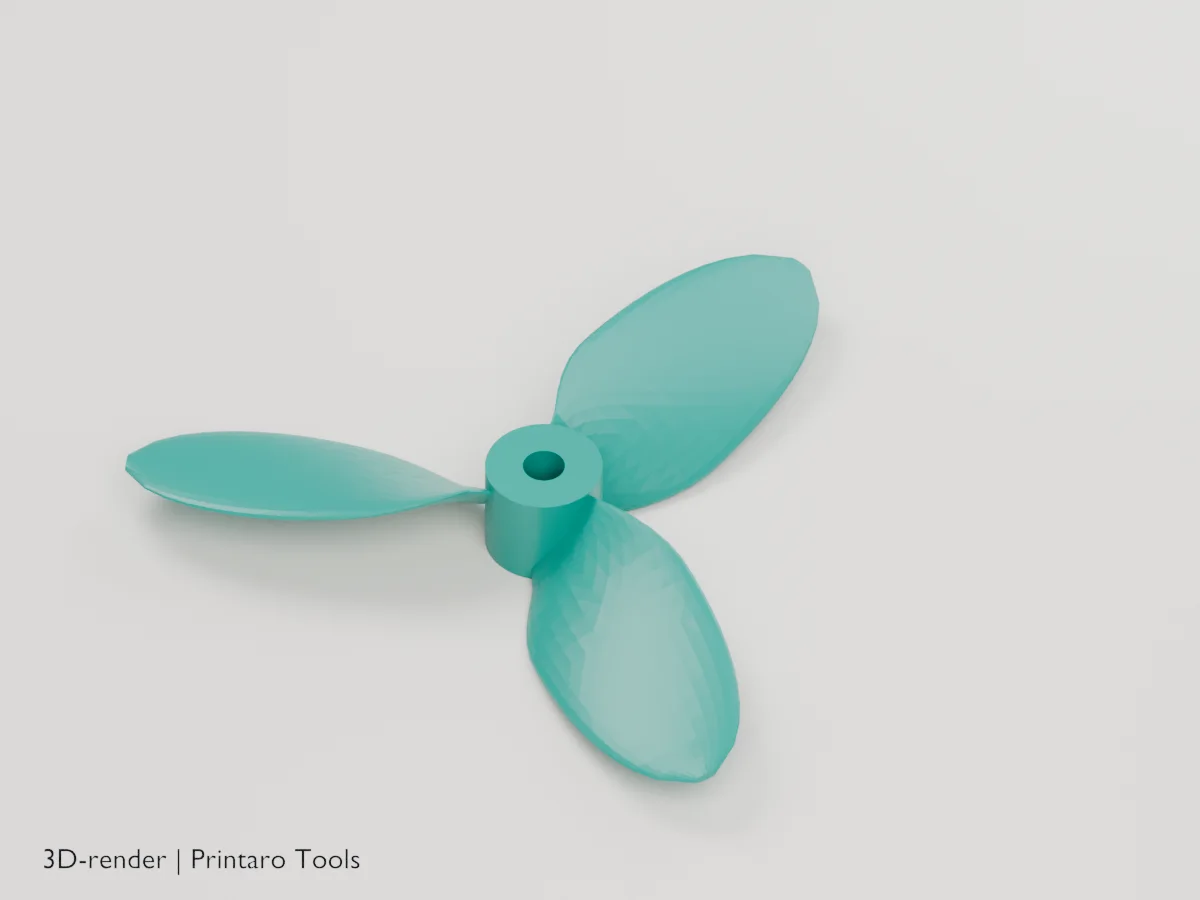
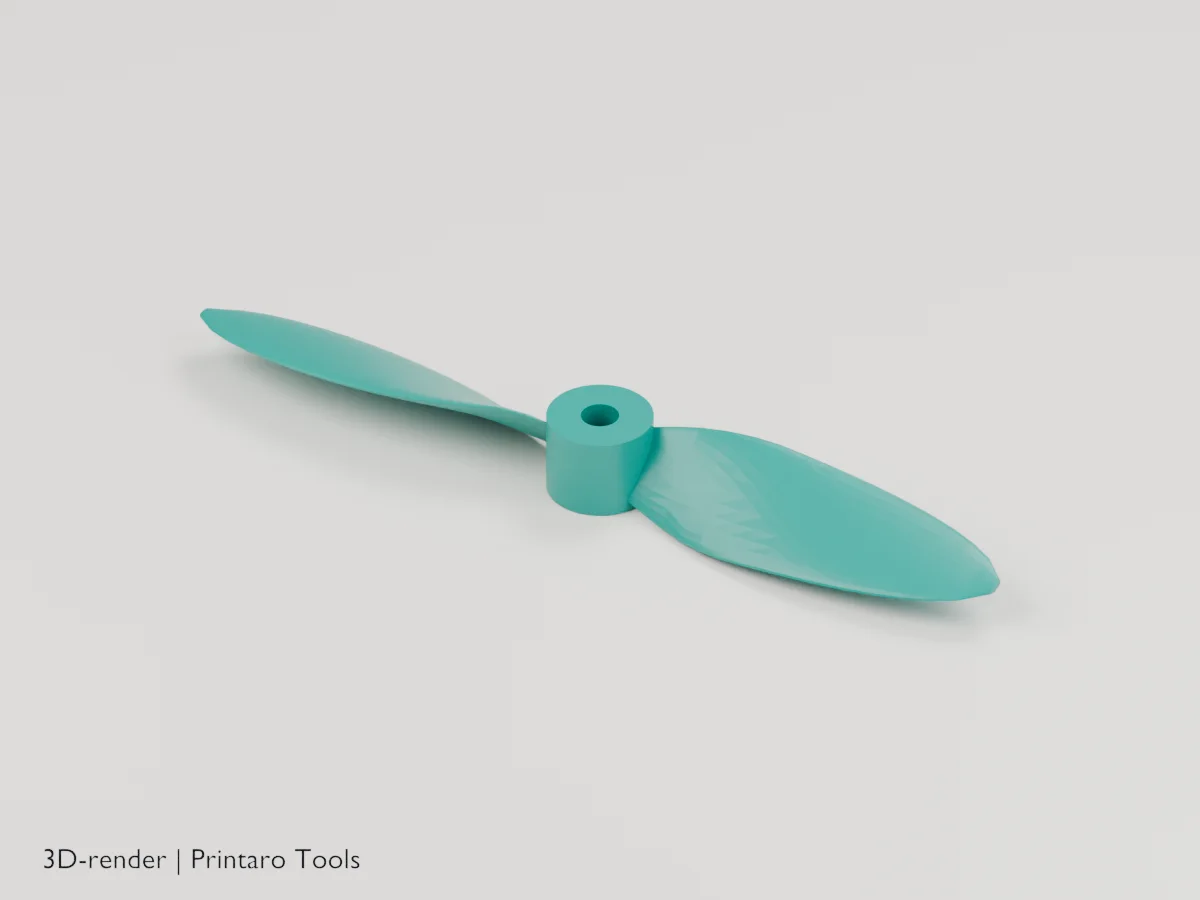
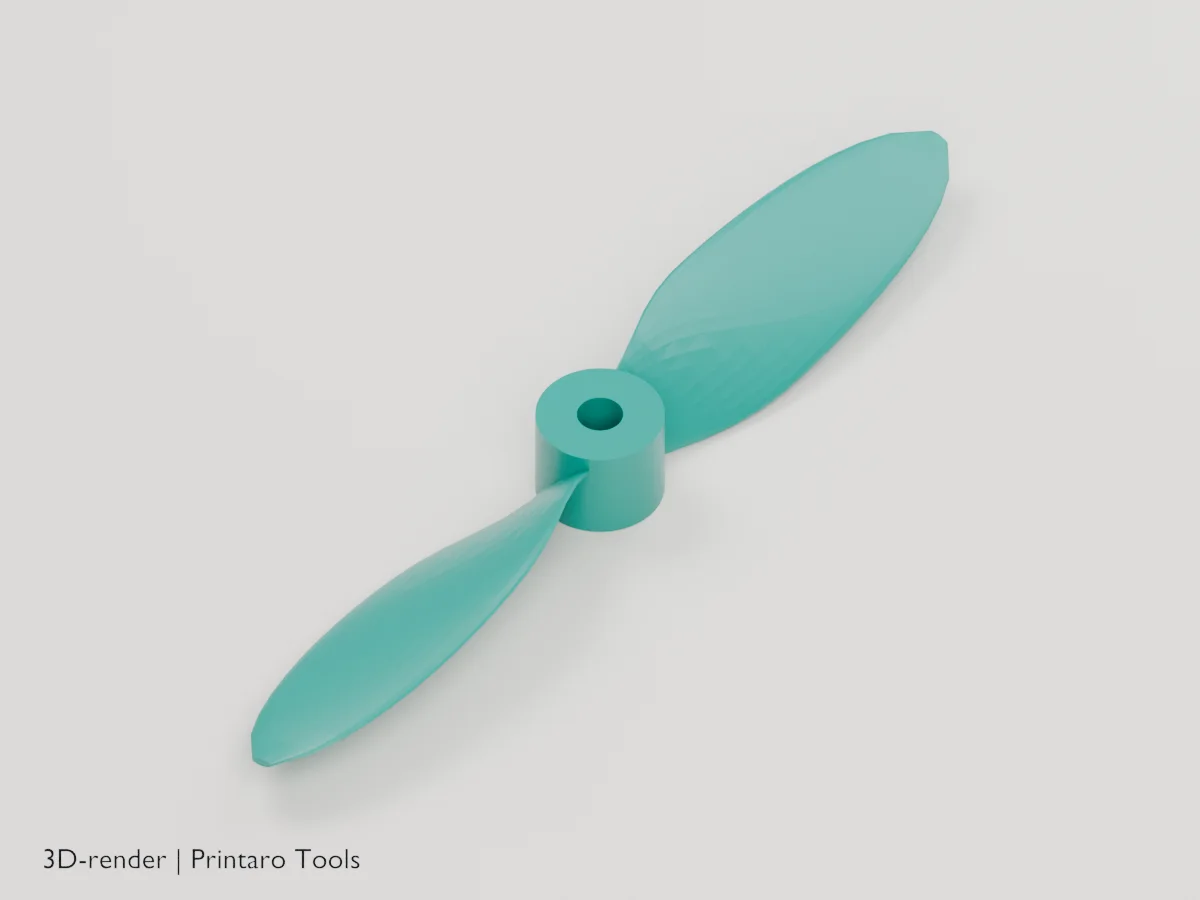
Examples made with this generator. These are 3D renders, not photos of prints.
No printer?
Printaro can print this design for you. Copy the link to your design and paste it in your message, so we know exactly which settings you chose.
Want your own printer? See which Bambu Lab printer to buy.
Keep the tools free
Found this useful?
These generators are free to use. If one saved you time, a small Ko-fi donation helps pay for hosting, rendering and new tools.
About this generator
Propellers with two to eight twisted blades: set the diameter, pitch, blade width, hub and bore. With an optional ring around the tips. For toys, models, wind spinners and airflow experiments.
How to use
- Set the number of blades, the diameter and the pitch.
- Set the hub and the bore for your shaft.
- Print flat, as shown.
Settings that matter most
- Diameter and Pitch together decide how steep the blades are. Pitch is how far one turn would move the propeller forward; the blades are twisted so they are steep at the hub and flatter at the tip.
- Blade width (5 to 80 mm) and Blade thickness, which is a percentage of the blade width: 12% of 22 mm is about 2.6 mm.
- Turns: counter-clockwise or clockwise, seen from above, for the blades to push air down. Pick the direction your motor or shaft turns.
- Bore and Bore shape: round, D-shaft or hex, from 1 to 20 mm. The hub has to be wider than the bore; the tool says so when it isn't.
- Ring around the tips: joins the blade tips, for a stiffer fan rotor.
Before you use it
- Thin blades at a low Blade thickness can print as single lines at the tip. Check the tips in the slicer's layer preview.
- Small differences between printed blades make a propeller uneven. Spin it slowly first and watch for wobble before you run it faster.
Printing tips
- The undersides of the blades overhang. Low pitch prints fine as it is; for steep blades, turn on supports that touch the bed only.
- Use 0.12 to 0.16 mm layers for smooth blades.
- Printed propellers can break at speed and throw pieces. Do not use them on drones, aircraft or fast motors, and wear eye protection when testing.
- For a press fit on a motor shaft, set the bore 0.1 mm under the shaft size.
Helpful guides
Frequently asked questions
Can I fly a drone with it?
No. Printed blades are weakest between the layers and can come apart at speed. This is for slow, light use.
What does the ring do?
It ties the blade tips together, which makes thin blades stiffer and the edge safer to touch.
Which pitch is best for a 3D printed propeller?
Pitch is how far one turn would move the propeller forward. A low pitch (about half the diameter or less) is easier for a small motor to spin and prints with gentler blade angles. A higher pitch moves more air per turn but needs more torque. Start with the default and change one step at a time.
Related tools
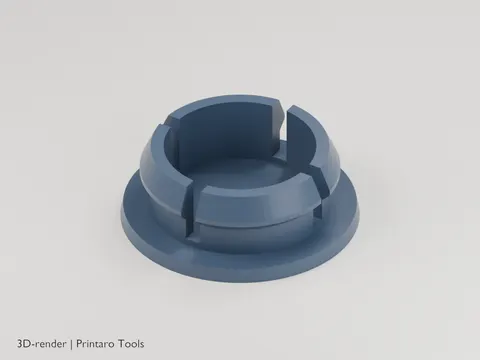
Hole Plug
Snap-in plugs for holes in panels and furniture
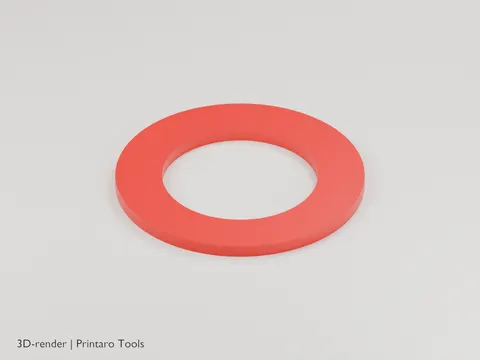
Gasket Generator
Flat gaskets, flange gaskets and O-rings in any size
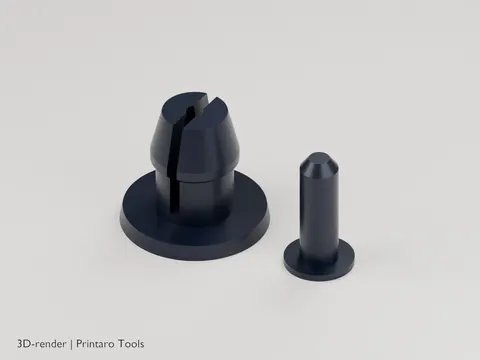
Push Rivet
Two-part rivets you fit and remove by hand
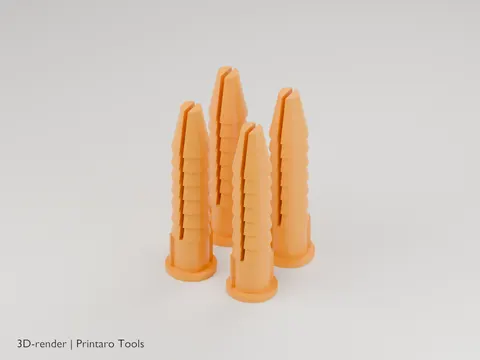
Wall Plug
Expanding wall plugs in the size you need
Ruler Maker
A ruler in your length, in cm, inches or both
Scraper
Scrapers and spreaders with the edge you need