Shim & Wedge Set
Wedges and shims in stepped sizes
Level wobbly furniture, align cabinet doors or pack out gaps.
Examples
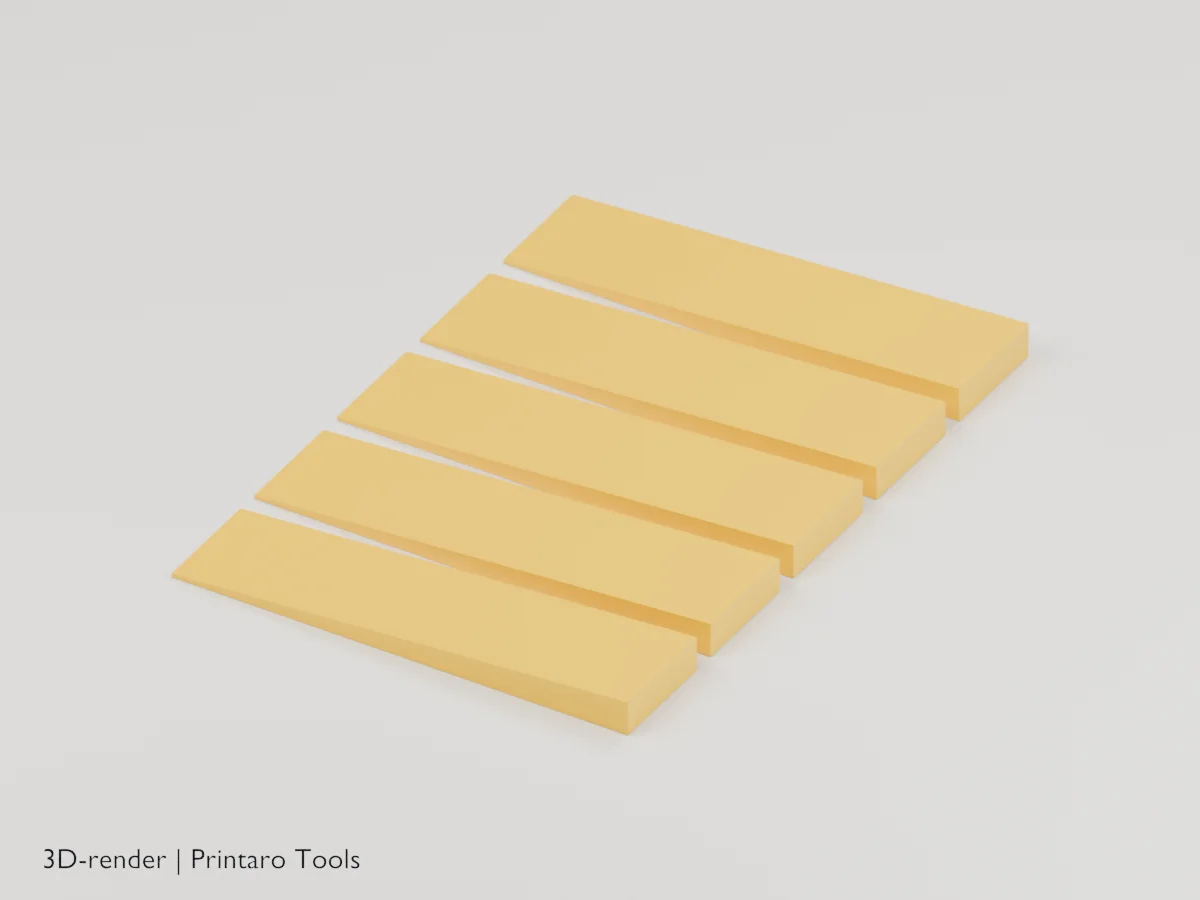
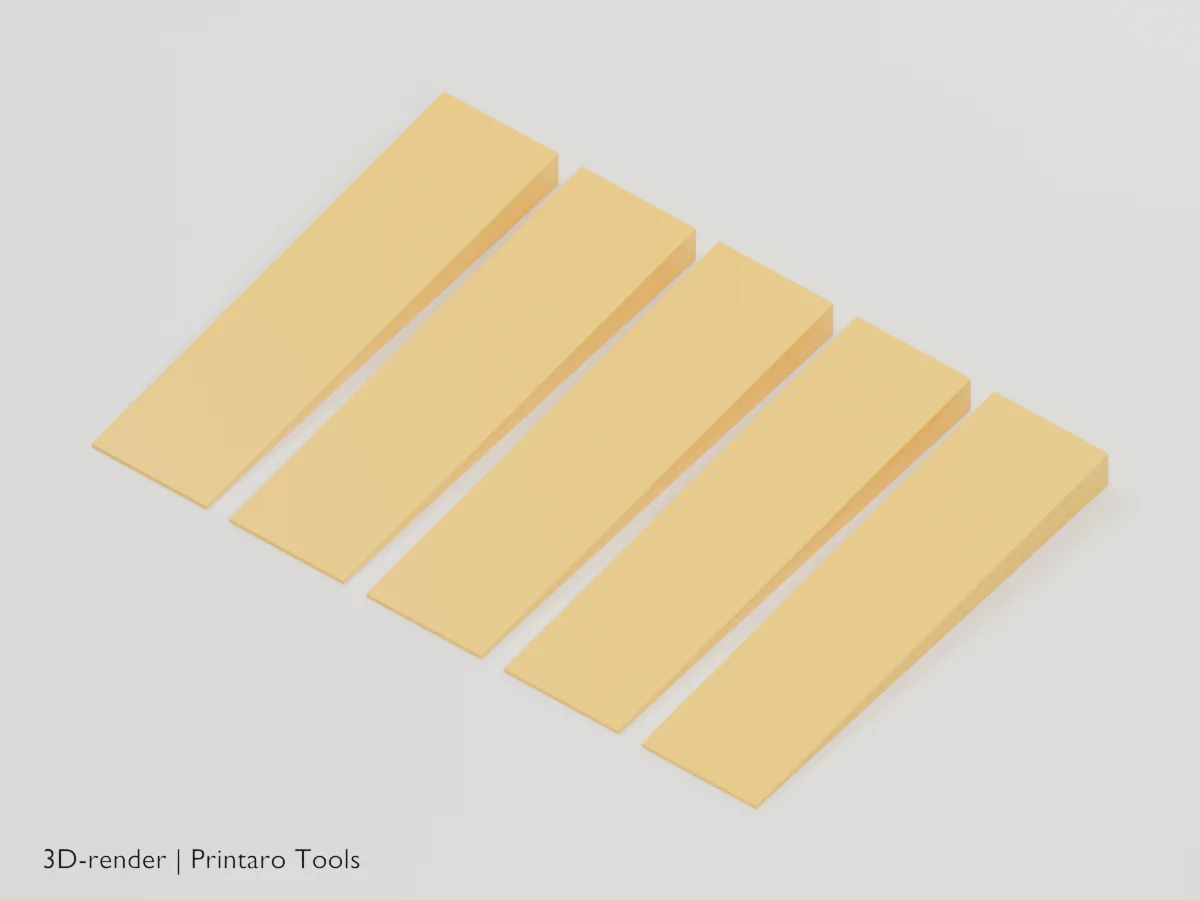
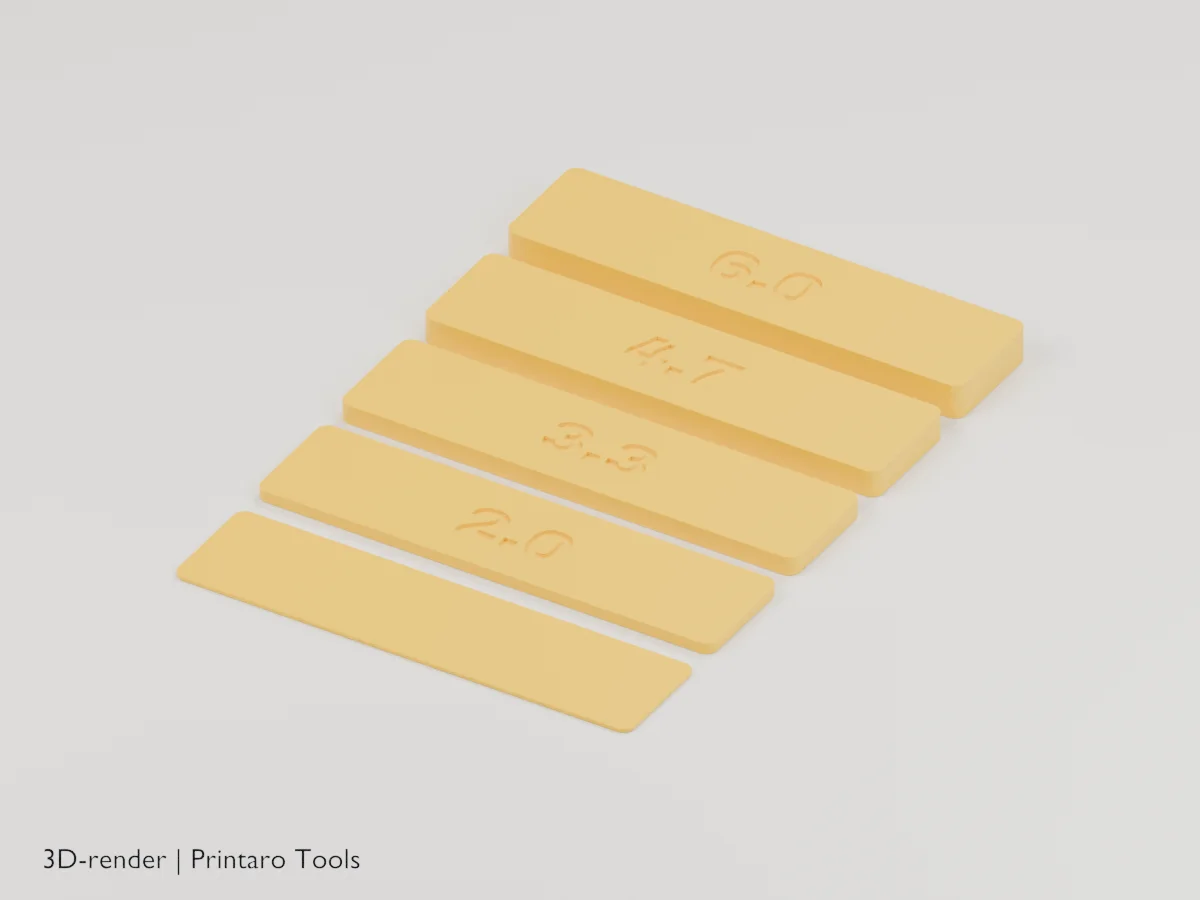
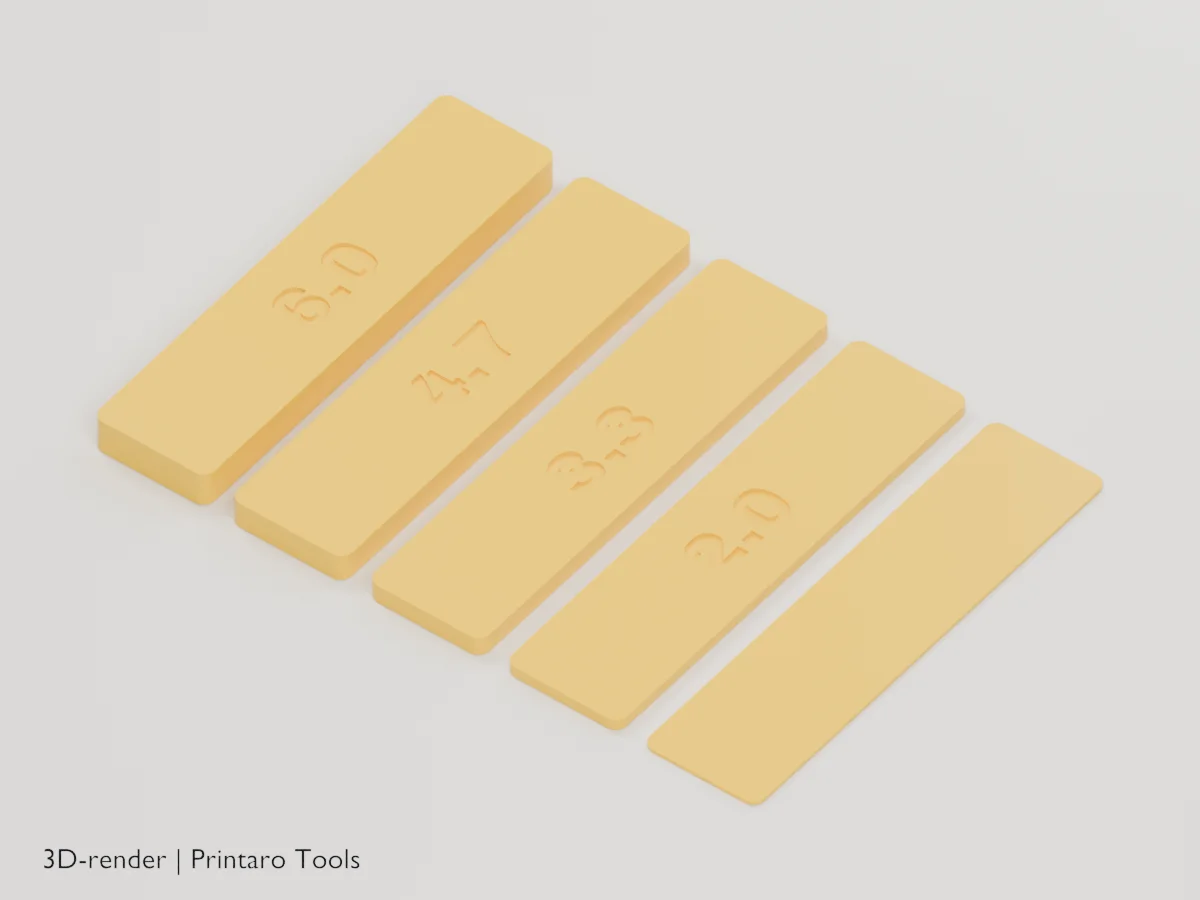
Examples made with this generator. These are 3D renders, not photos of prints.
No printer?
Printaro can print this design for you. Copy the link to your design and paste it in your message, so we know exactly which settings you chose.
Want your own printer? See which Bambu Lab printer to buy.
Keep the tools free
Found this useful?
These generators are free to use. If one saved you time, a small Ko-fi donation helps pay for hosting, rendering and new tools.
About this generator
A set of wedges, or flat shims in stepped thicknesses with the thickness engraved on each.
How to use
- Choose wedges or flat shims.
- Set the thickness range and quantity.
- Print the set.
Wedges or flat shims
All wedges in a set are the same, rising from Thinnest to Thickest. Slide two against each other to adjust a gap. Flat shims step evenly between the two values, each with its thickness engraved if it is at least 1.4 mm thick.
Real thickness depends on your layers
A printer can only make whole layers. With 0.2 mm layers, a 1.95 mm shim comes out at about 2.0 mm. Choose values that match your layers, for instance 10 shims from 0.6 to 6 mm, which steps by exactly 0.6 mm. The engraved number is rounded to one decimal. If the exact value matters, measure each one with calipers.
A 0.4 mm shim is only two layers thick, and it can tear when you take it off the bed.
Under load
PLA slowly deforms under a constant load, so use PETG for anything that stays under weight. Don't use printed shims under a load that could hurt someone if they slip, such as a jacked car.
Printing tips
- Flat shims show their thickness: handy for leveling appliances.
- PETG wedges don't creep under load like PLA.
Helpful guides
Frequently asked questions
Wedges or flat shims?
Wedges are for adjusting a gap gradually, like under a door or a cabinet. Flat shims come in fixed steps with the thickness engraved, handy for leveling appliances.
Which filament holds up under load?
PETG. PLA slowly deforms under constant load.
Related tools
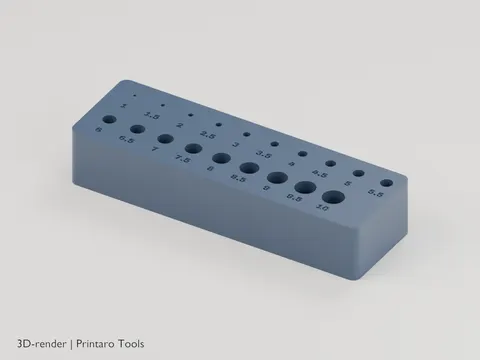
Drill Bit Index
A labeled stand for every drill bit size
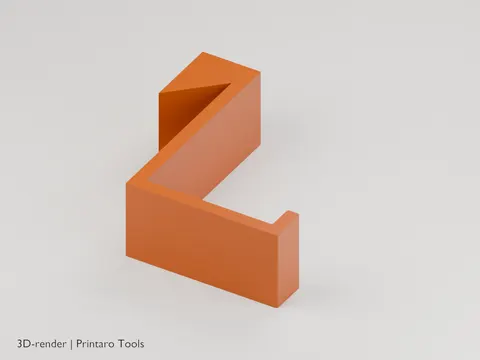
French Cleat Accessory
Hooks, shelves and holders for a cleat wall
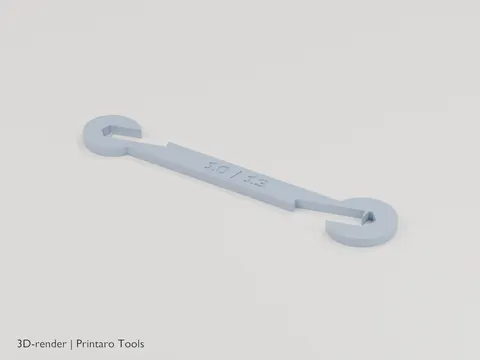
Flat Wrench
Open-ended spanners for any nut size
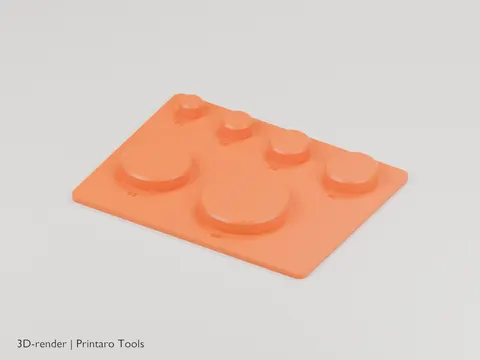
Hole Saw Organizer
A post for every hole saw, with the size engraved
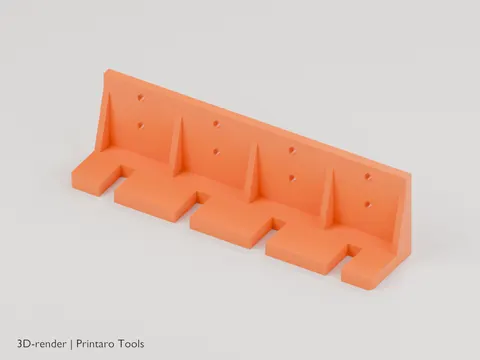
Clamp Rack
Wall rack for bar clamps and F-clamps
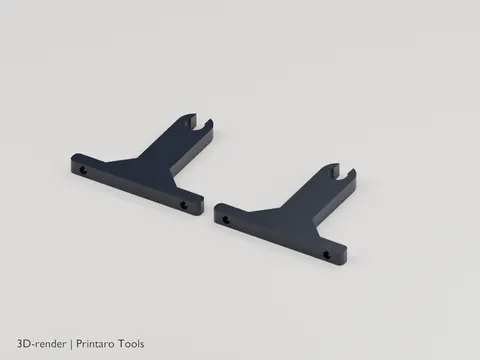
Wire Spool Holder
Brackets for a rod with spools of wire or solder