Hex Terrain Tile
Hex tiles for tabletop maps
Build a map for your board game or RPG: print grass in green, water in blue and hills with levels.
Examples
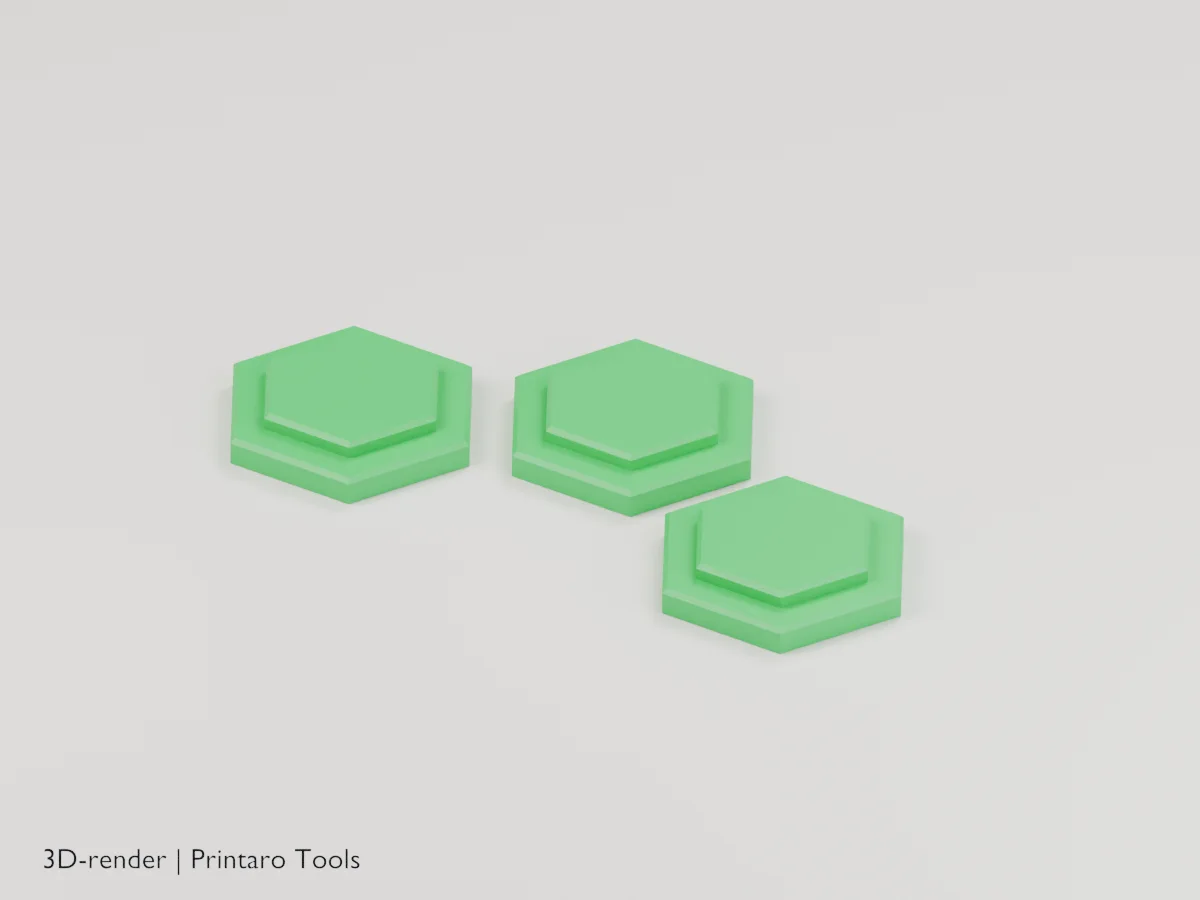
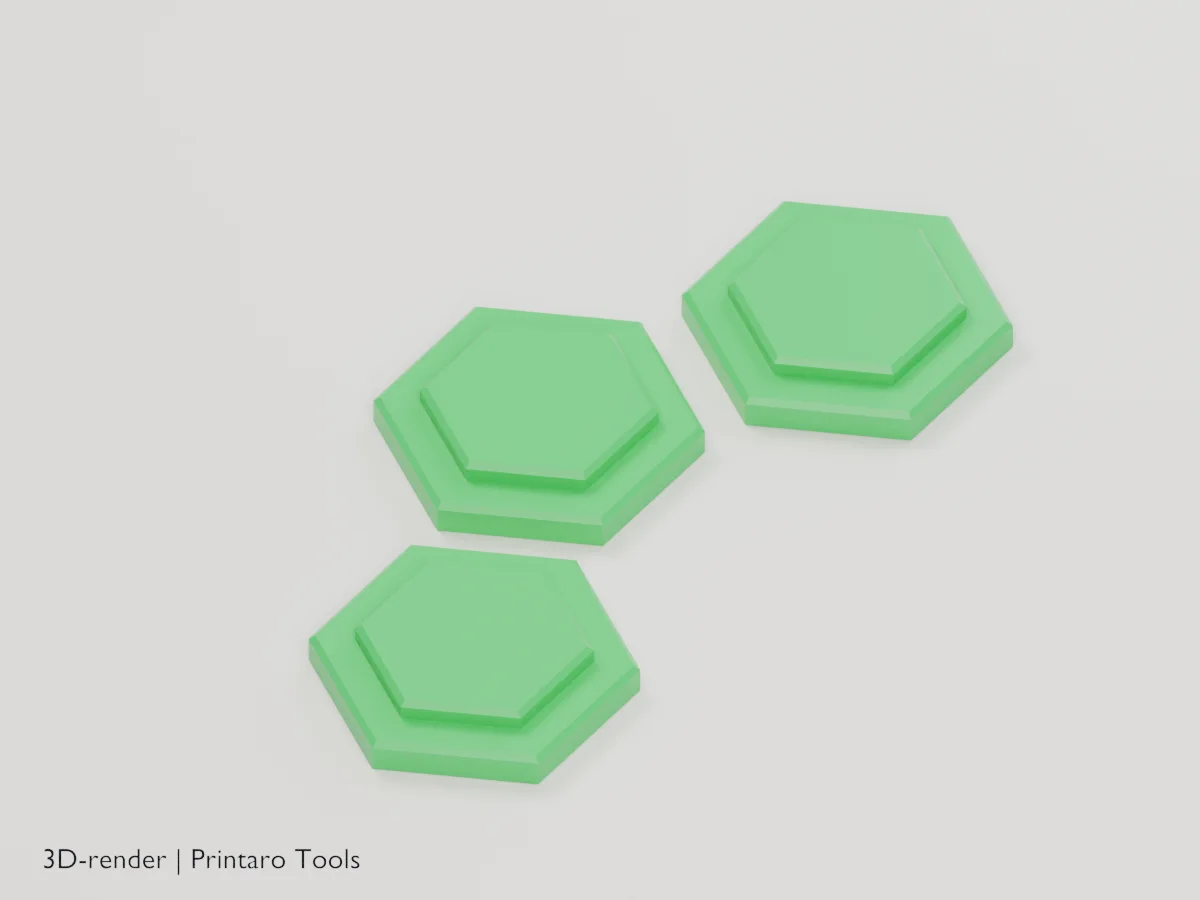
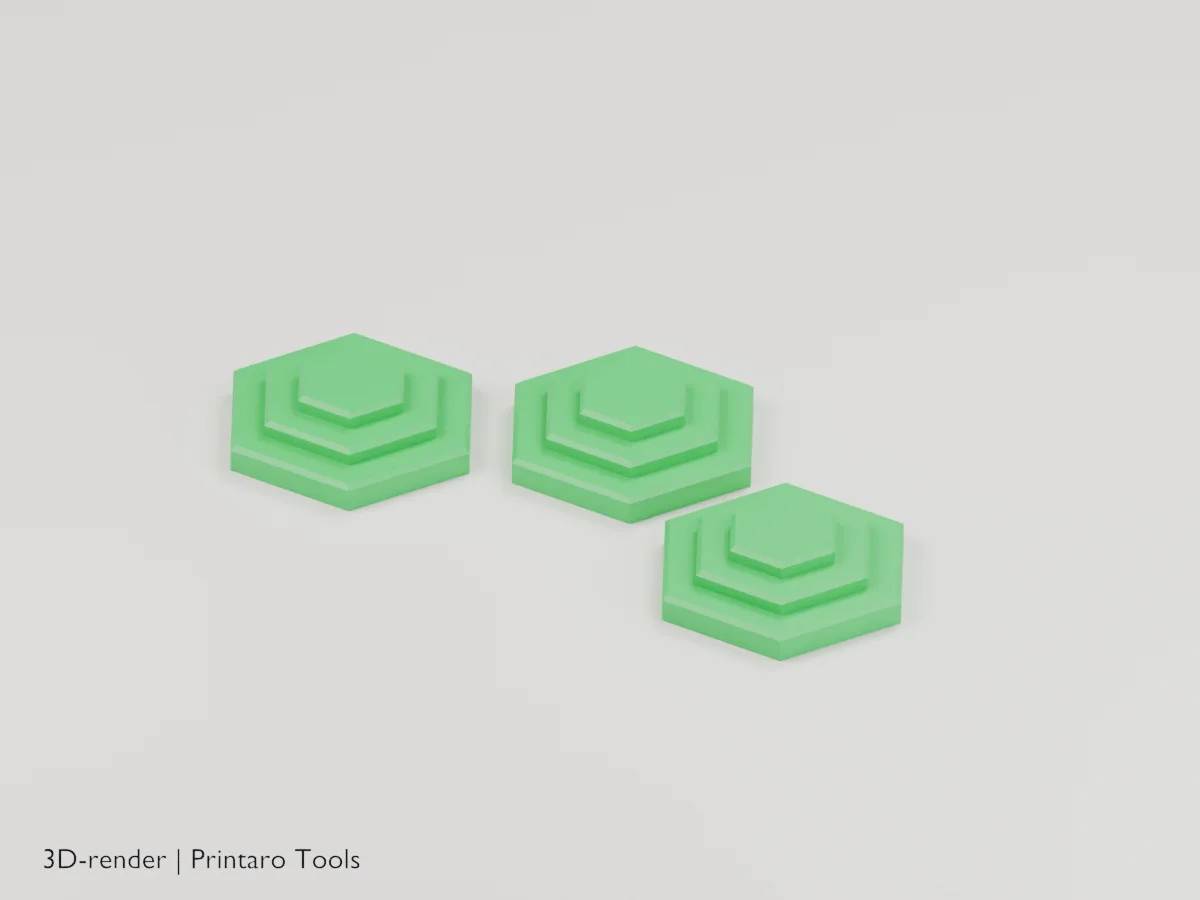
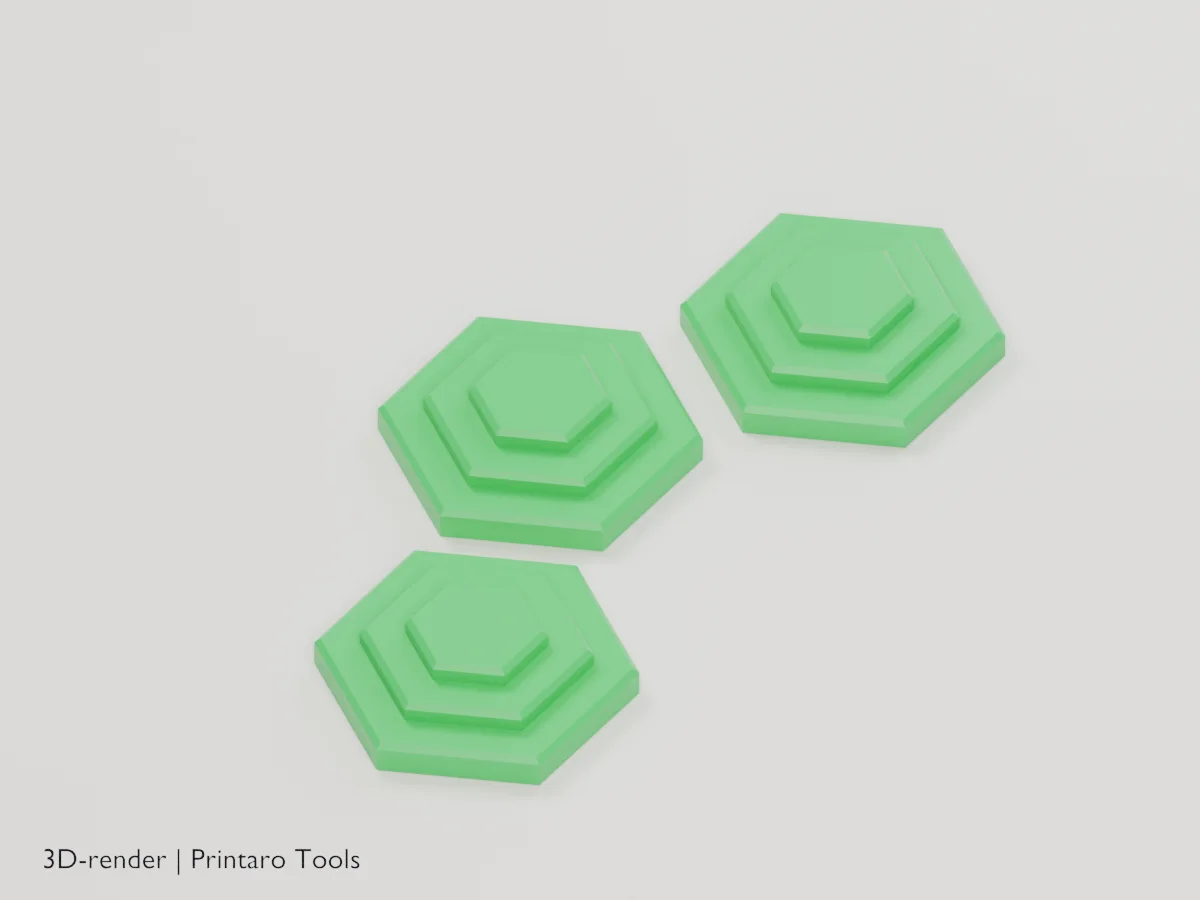
Examples made with this generator. These are 3D renders, not photos of prints.
No printer?
Printaro can print this design for you. Copy the link to your design and paste it in your message, so we know exactly which settings you chose.
Want your own printer? See which Bambu Lab printer to buy.
Keep the tools free
Found this useful?
These generators are free to use. If one saved you time, a small Ko-fi donation helps pay for hosting, rendering and new tools.
About this generator
Hex tiles for board games and tabletop maps, with beveled edges, optional hill levels and magnet pockets.
How to use
- Choose the size and height.
- Add hill levels for elevation.
- Print in the colors of your terrain.
Fitting tiles together
Size is measured between two flat sides, and tiles are exactly that size. Tiles of the same Size line up edge to edge, and the bevel hides small differences. If your printer adds a raised edge at the first layer, the tiles won't sit tight, so reduce the elephant's foot in the slicer or trim the edge.
Print one batch of the same size and don't change Size between terrain colors, because the tiles then stop lining up.
Levels
Levels 2 and 3 add a stepped hill. Each level is 60% of the tile Height taller, and 28% narrower than the tile for level 2, 56% for level 3. A 50 mm tile with Height 6 has a level 2 of 36 mm across and a level 3 of 22 mm across, at 9.6 and 13.2 mm high. Check that your pieces stand on those.
Batches
Twelve 50 mm tiles fill about 216 × 183 mm of bed. Quantity lays them out in up to four columns with offset rows. A large map takes a lot of prints, so test one tile with your pieces before printing them all.
With magnets, the tile must be at least 0.8 mm thicker than the magnet. The pocket is on the underside, in the first layers.
Printing tips
- Print a batch in each terrain color.
- Magnets let tiles stick to a steel board.
Helpful guides
Frequently asked questions
How is the size measured?
Across the flats, from one straight side to the opposite side.
What are the magnet pockets for?
With magnets underneath, the tiles stick to a steel board and don't slide around.
Related tools
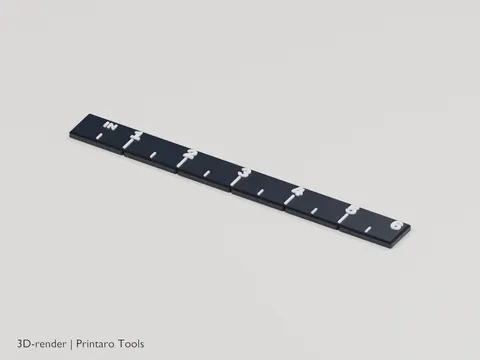
Range Ruler
Measuring stick in inches or centimeters
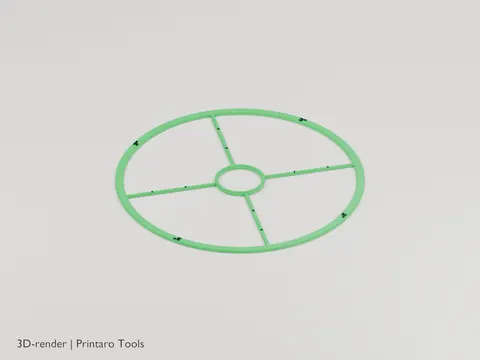
Aura Ring
A ring that shows a range around a model
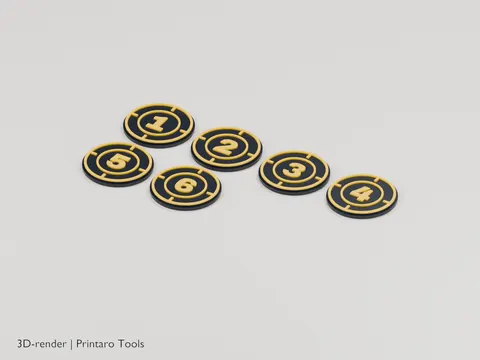
Objective Marker
Numbered markers for wargame objectives
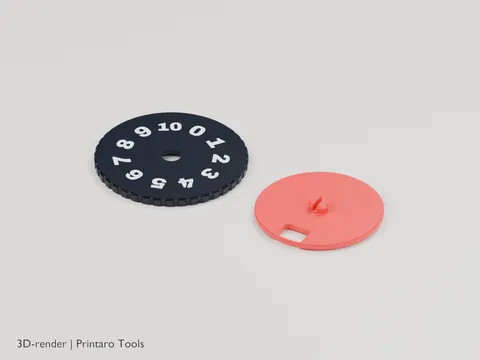
Counter Dial
A numbered dial for wounds or points
Painting Handle
A grip to hold miniatures while painting
Movement Tray
Tray to move a unit of miniatures at once