Maze Puzzle
Random labyrinths from a seed
Every maze number makes a different labyrinth. Roll a ball bearing through, or trace it with a finger.
One solid body, no colors. Works with every slicer.
Examples
Examples made with this generator. These are 3D renders, not photos of prints.
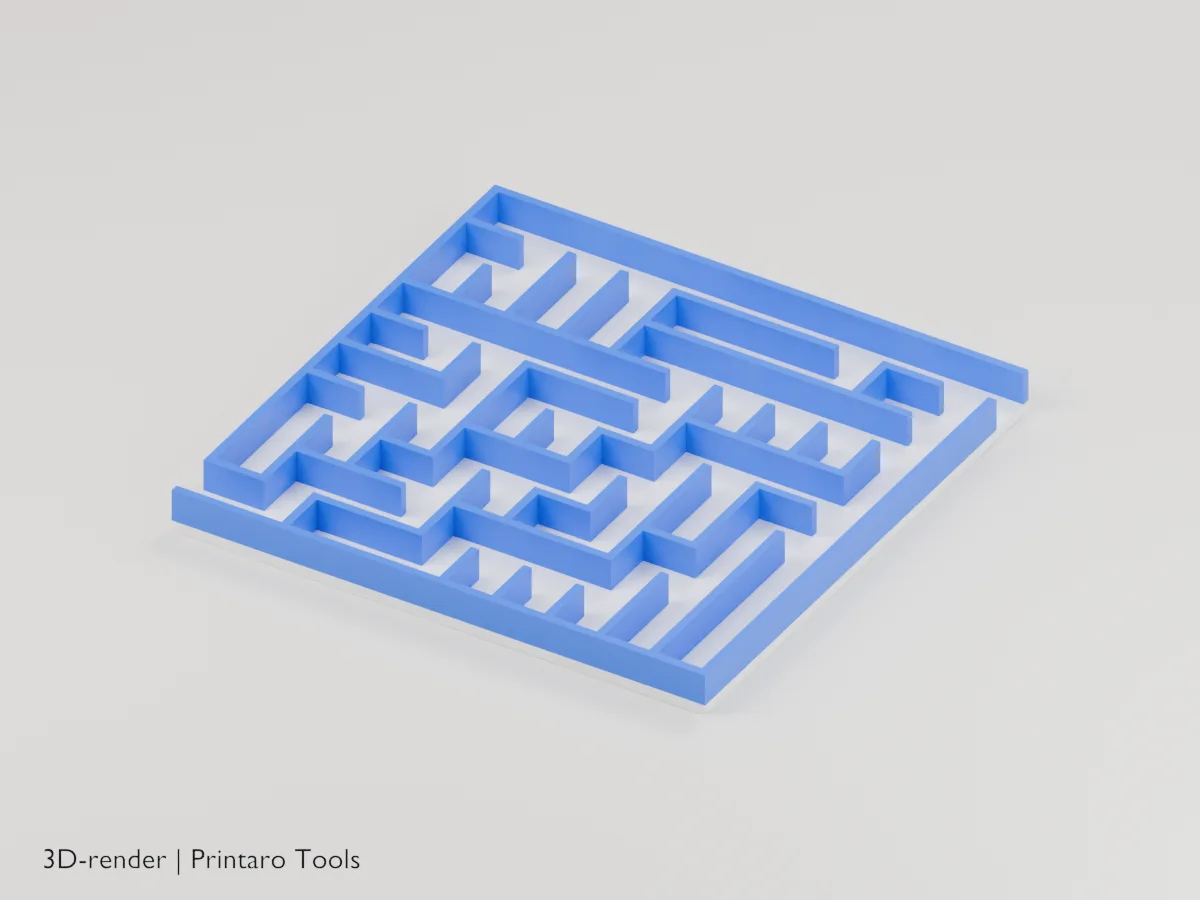
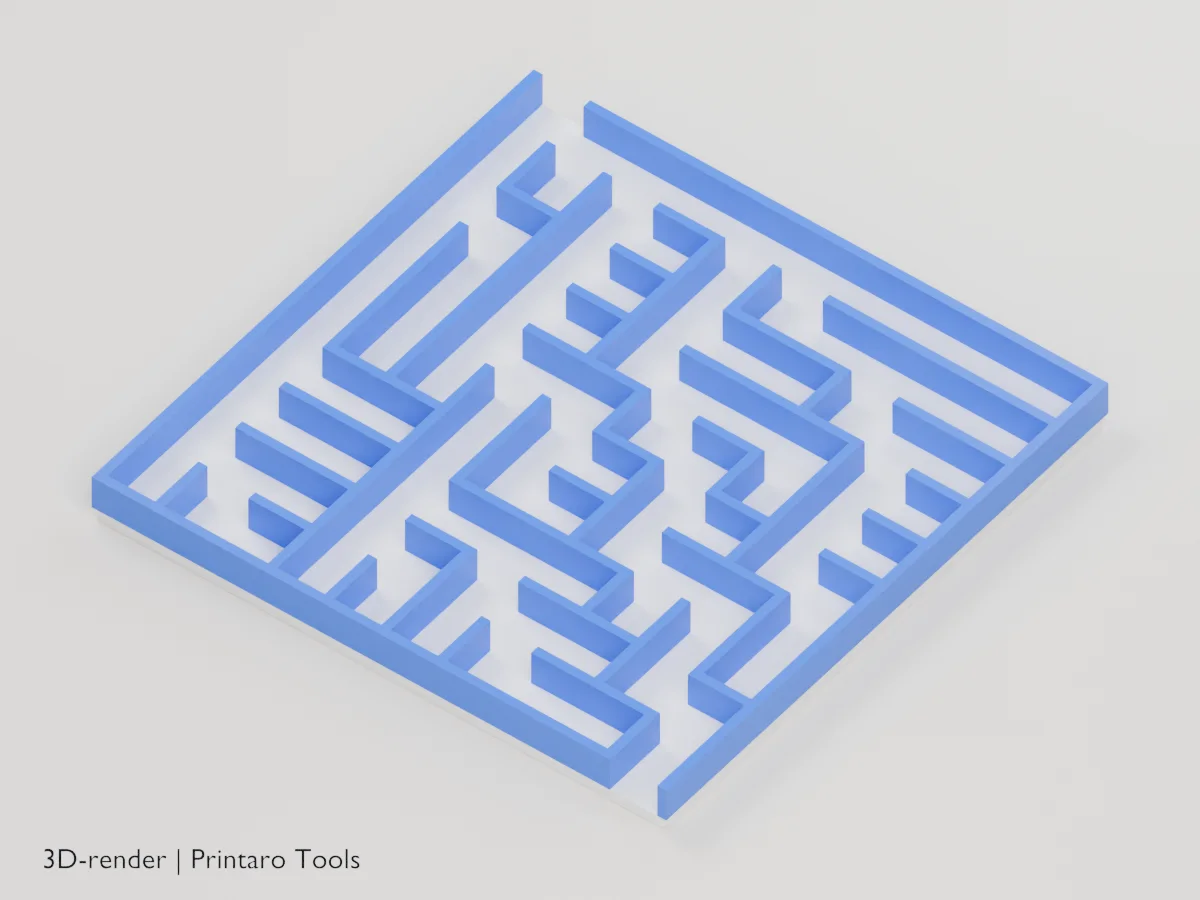
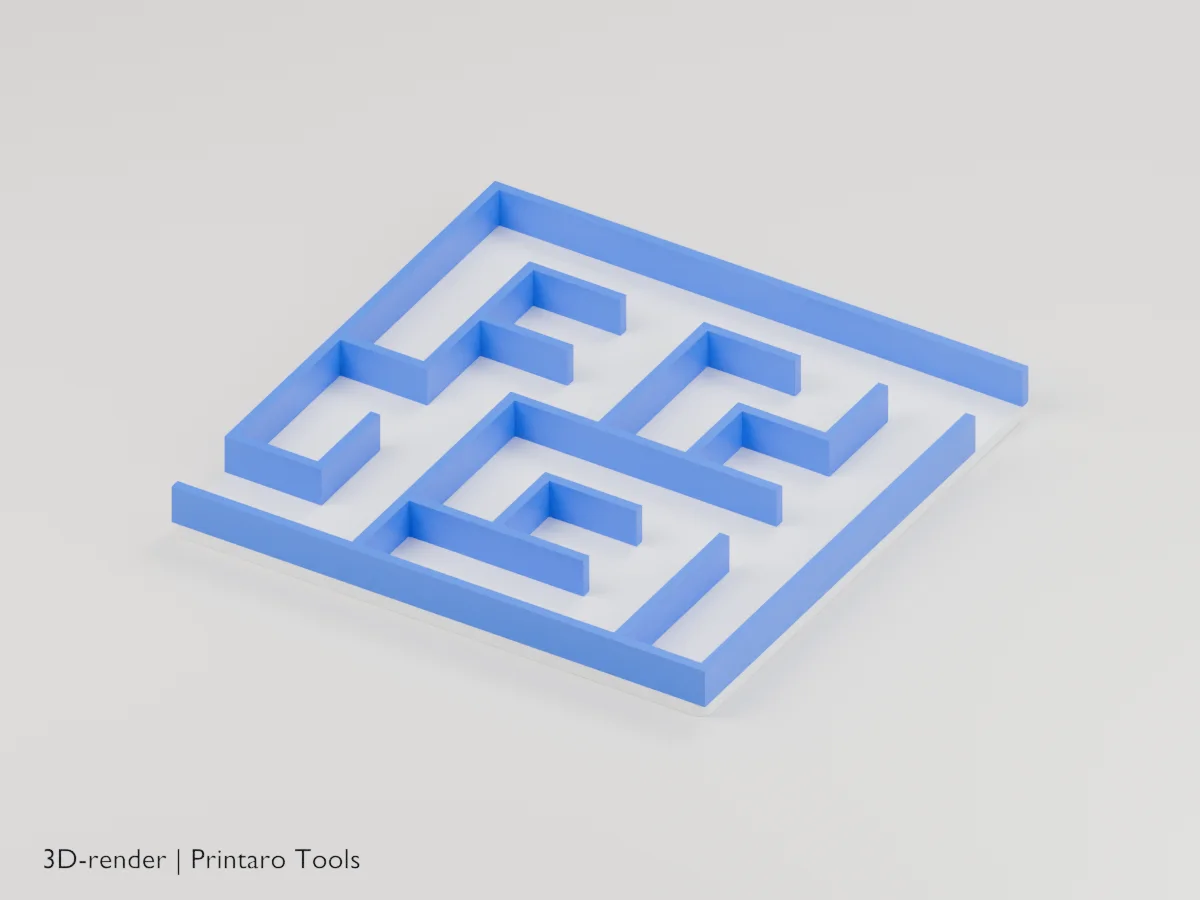
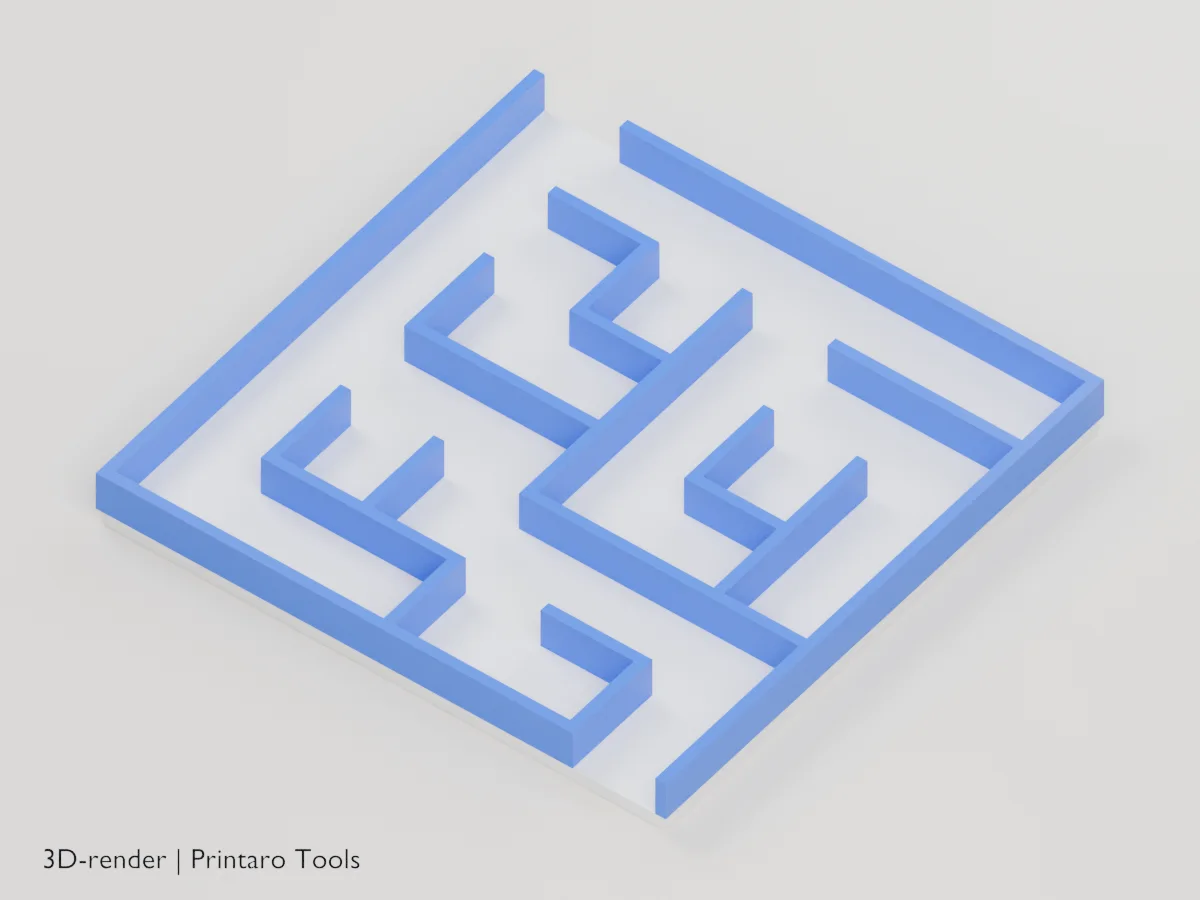
No printer?
Printaro can print this design for you. Copy the link to your design and paste it in your message, so we know exactly which settings you chose.
Want your own printer? See which Bambu Lab printer to buy.
Keep the tools free
Found this useful?
These generators are free to use. If one saved you time, a small Ko-fi donation helps pay for hosting, rendering and new tools.
About this generator
A random maze from a seed number, always solvable, with the walls as a separate color.
How to use
- Choose the size.
- Try different maze numbers until you like one.
- Print, in two colors with the 3MF.
Choosing a ball
The free width of a passage is Cell size minus Wall thickness. A 10 mm cell with 1.6 mm walls leaves 8.4 mm, so a 6 mm ball runs freely. The Hard preset, with 8 mm cells, leaves 6.4 mm: a 6 mm ball barely fits, and printing can narrow that further. Use a 4 or 5 mm ball there, or a finger for the large cells.
There is no lid, and the entrance and exit are open, so a ball can roll out. Tilt it gently, and keep small balls away from small children.
How hard it is
The maze is generated so that every cell can be reached, and the entrance at the bottom left always connects to the exit at the top right. This method always leaves a straight corridor along the top and right edges, so large grids are harder but don't become truly devious. Try several maze numbers and pick one you like in the preview.
Printing
The size is columns × cell + wall: 101.6 mm by default, and up to about 500 mm at the largest settings, so check your bed. The walls start at 2 mm, so in a single-nozzle printer you can change filament there and get two colors without a 3MF. Very thin walls of 1.2 mm can break off if you pull them, so treat them gently when you take the print off the bed.
Printing tips
- A 6 mm ball bearing works in 10 mm cells.
- Bigger mazes are harder: try 20 × 20.
Helpful guides
Frequently asked questions
Is every maze solvable?
Yes. Every maze number gives a different maze, and every one can be solved.
What do I play it with?
A small ball: a 6 mm ball bearing works in 10 mm cells. Or just trace the path with a finger.
Related tools
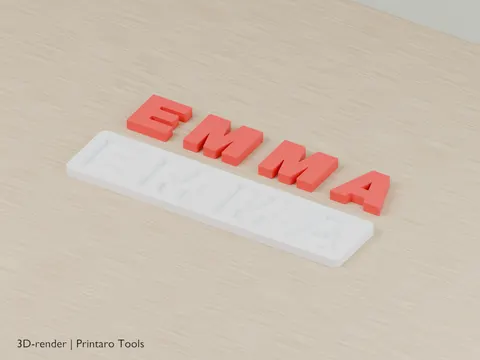
Name Puzzle
A kids' puzzle of their own name
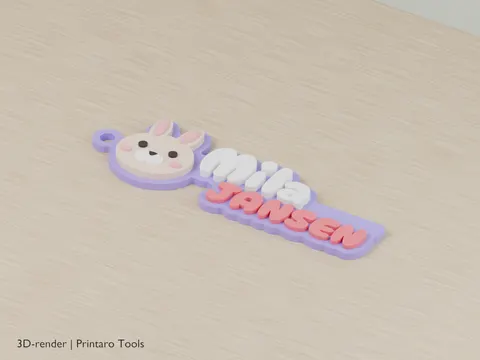
Animal Double Name Keychain
First and last name with an animal head, in up to six colors
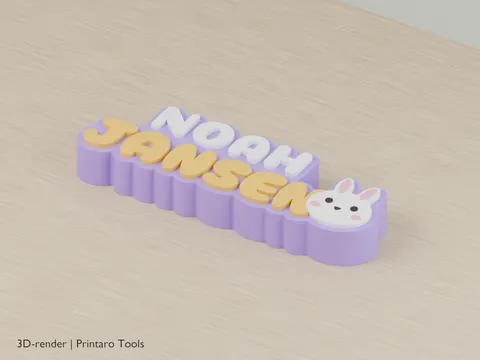
Bunny Double Name Sign
Two names on a thick block with a bunny
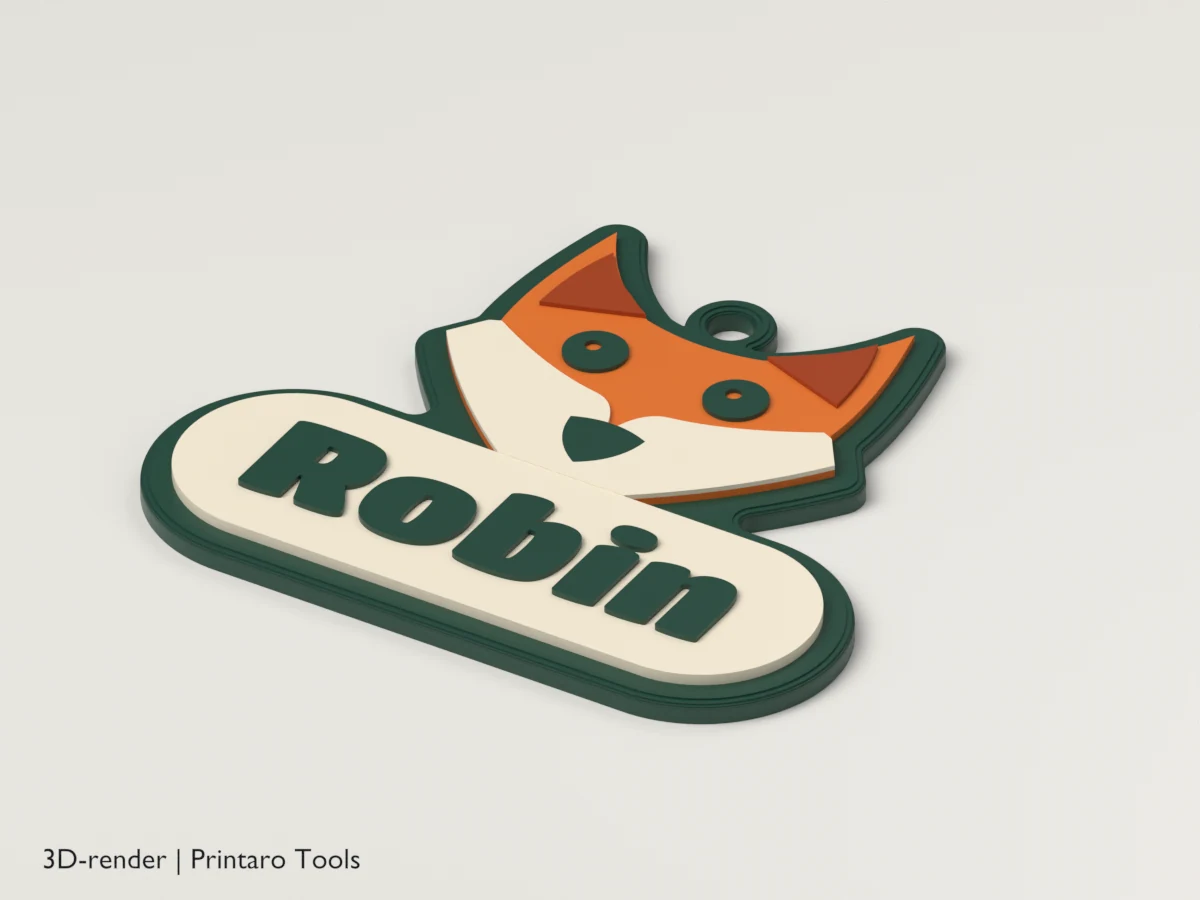
Illustrated Name Sign
A name on a ribbon under a drawing, in five colors
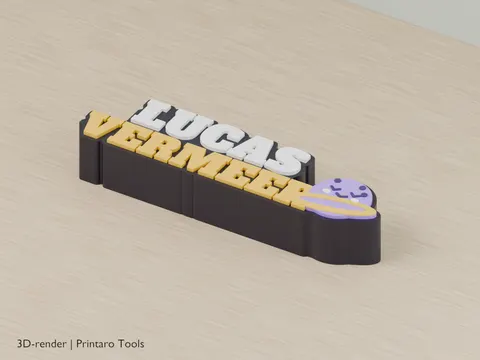
Planet Double Name Sign
Two names on a thick block with a planet
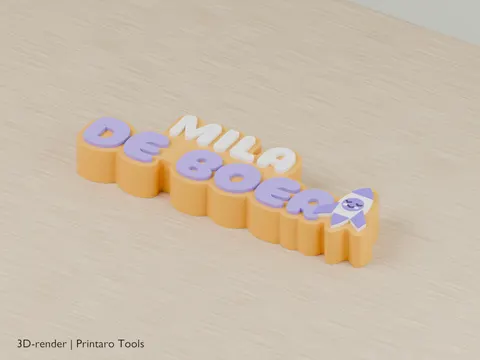
Rocket Double Name Sign
Two names on a thick block with a rocket