Pipe Clamp
Saddle clamps for pipes, tubes and rods
Mount pipes, broom handles, curtain rods or cable conduit. Enter the outside diameter and print a clamp that fits snugly.
Examples
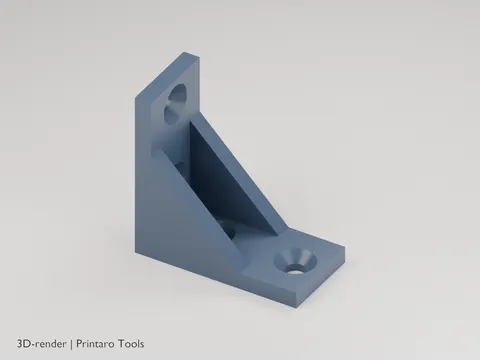
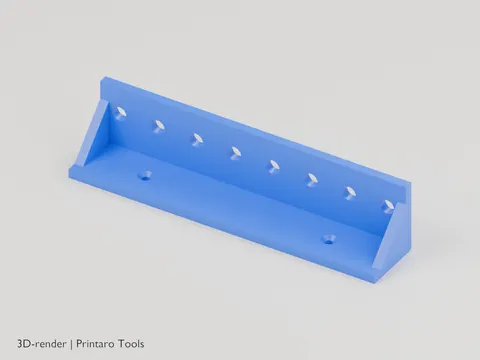
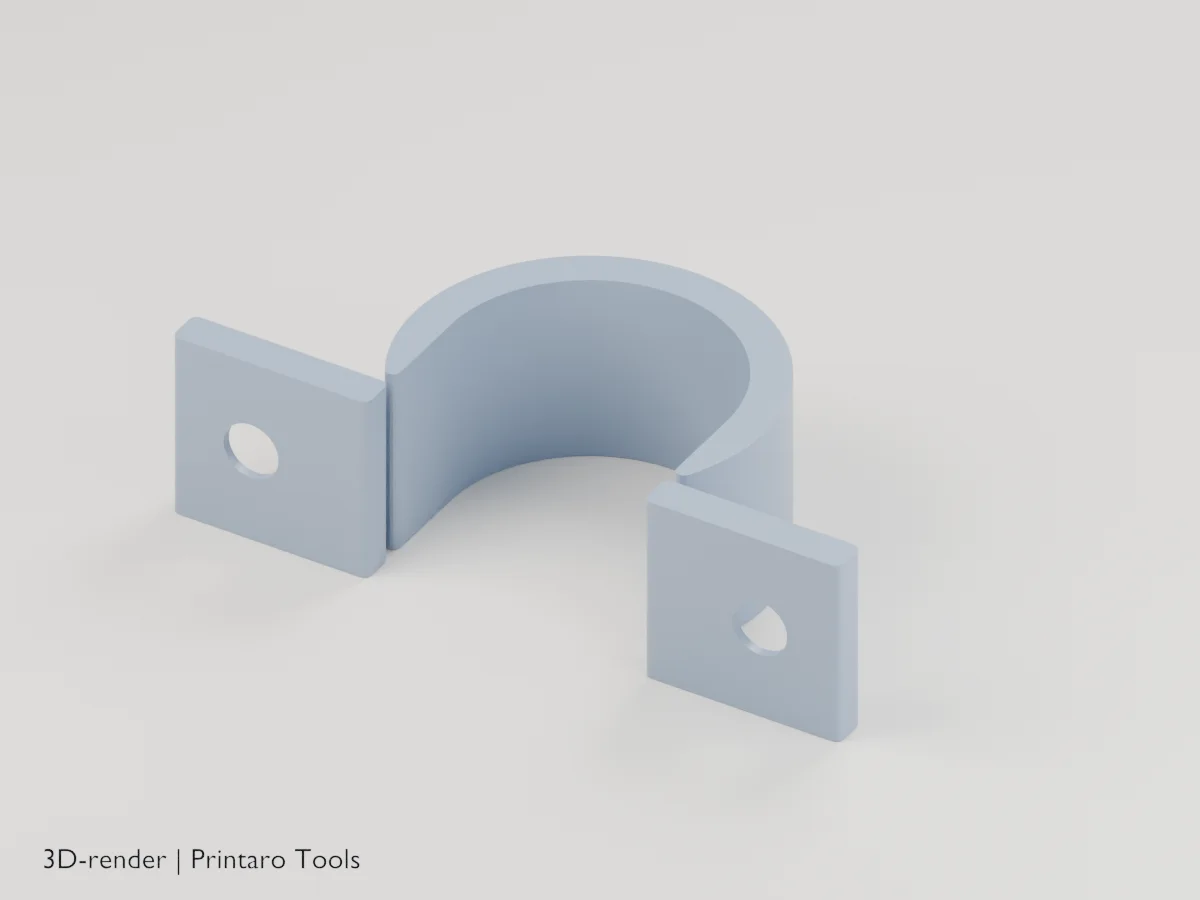
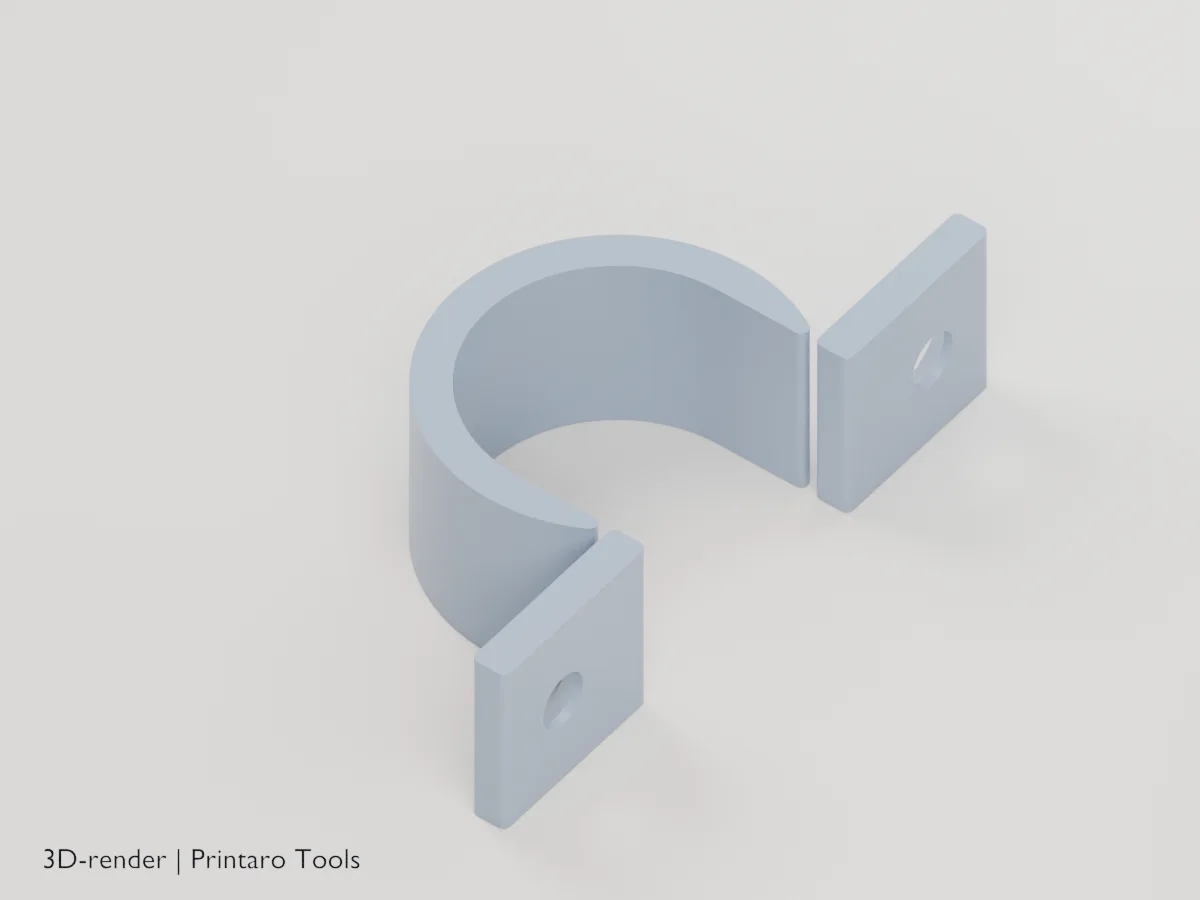
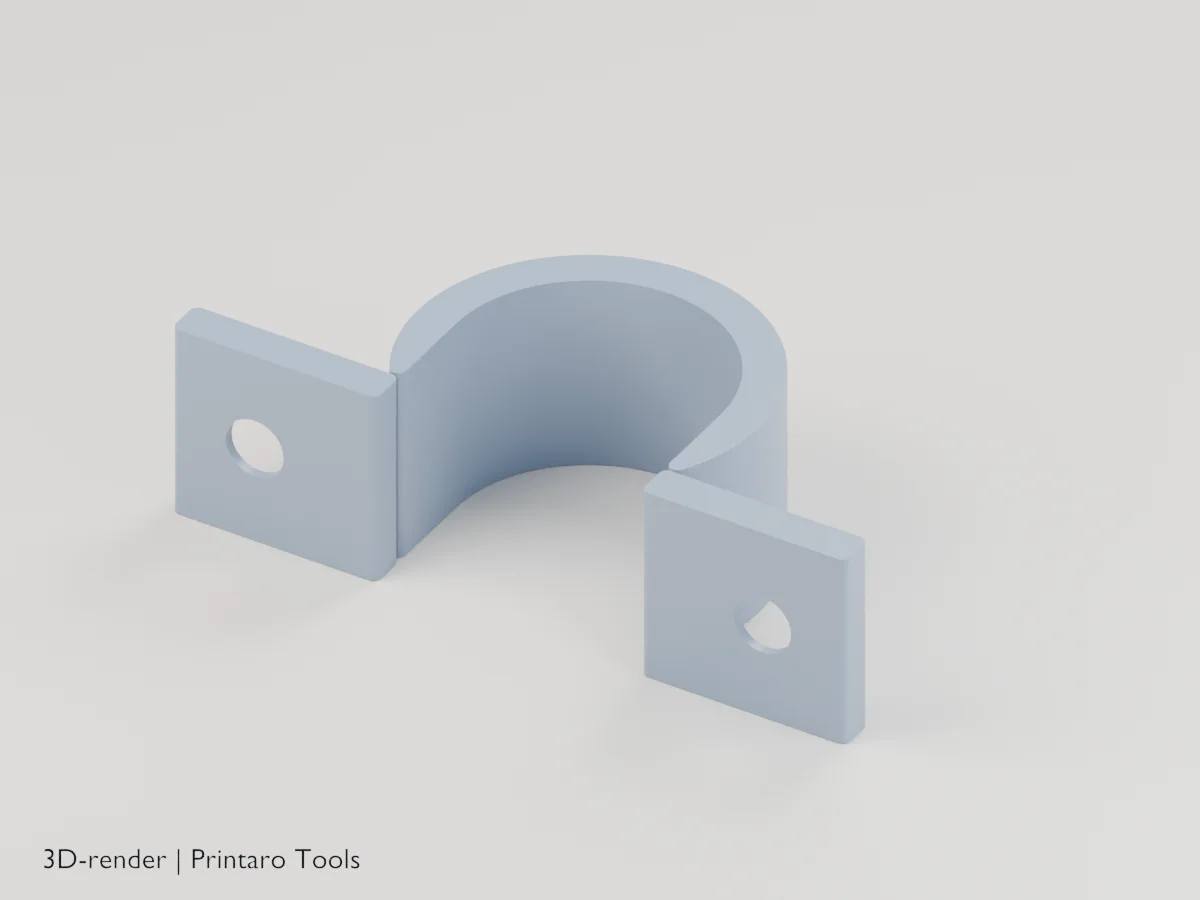
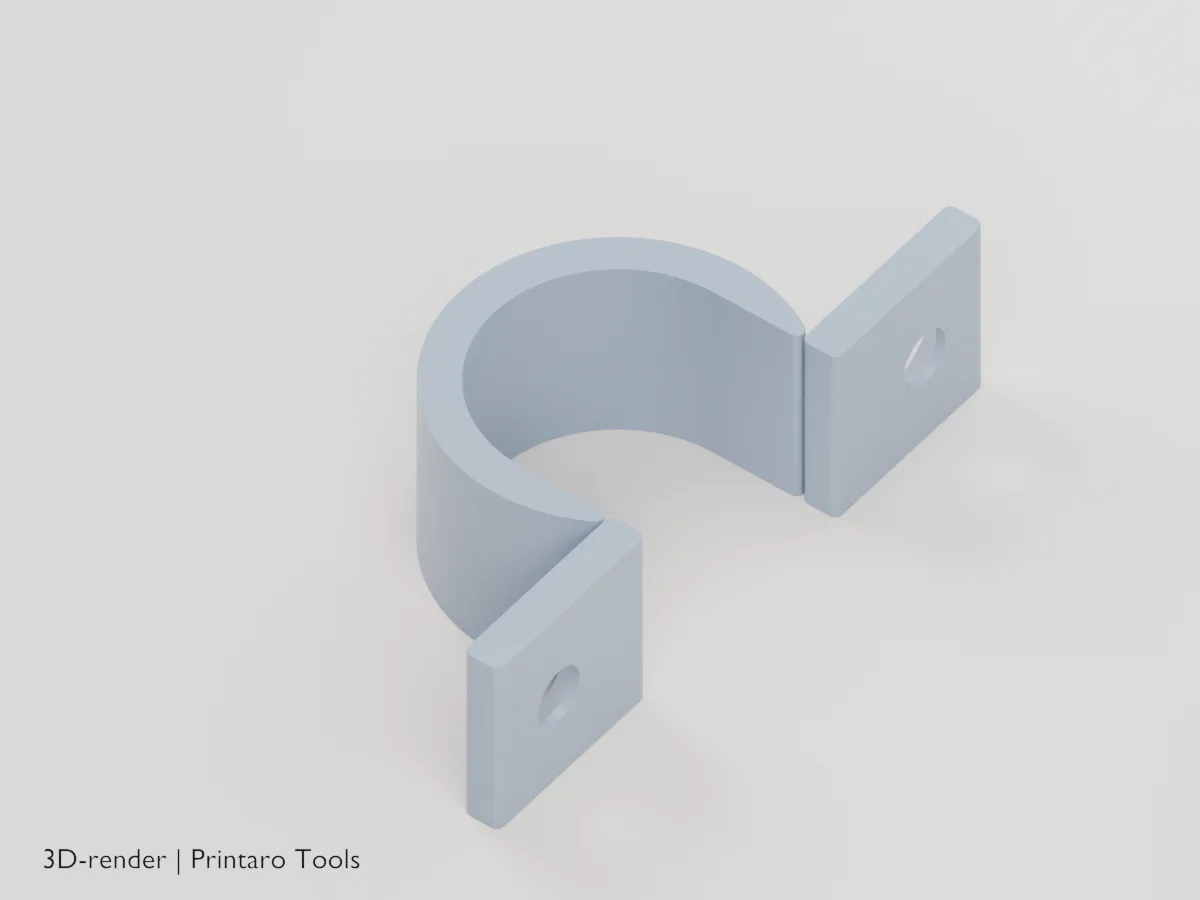
Examples made with this generator. These are 3D renders, not photos of prints.
No printer?
Printaro can print this design for you. Copy the link to your design and paste it in your message, so we know exactly which settings you chose.
Want your own printer? See which Bambu Lab printer to buy.
Keep the tools free
Found this useful?
These generators are free to use. If one saved you time, a small Ko-fi donation helps pay for hosting, rendering and new tools.
About this generator
Two-screw saddle clamps to fix pipes, tubes, rods and conduit to a wall or bench, sized to your pipe diameter.
How to use
- Measure the pipe's outside diameter.
- Choose the clamp width and thickness.
- Print on its side as exported, then screw it down.
How it fits
The clamp is an arch with a screw tab on each side. The inside is the pipe's outside diameter plus twice the clearance. The arch center sits one radius above the mounting surface, so the pipe is held against the wall as you tighten the screws. It doesn't snap on, so hold the pipe in place while you screw.
Measure the pipe itself with calipers. If a pipe has insulation, measure over it.
Sizes
The default 22 mm clamp is about 55 mm wide across the tabs and about 26 mm tall. Tabs get wider with the screw, at twice its diameter plus 4 mm. It prints on its side, so Clamp width is the print height, and the arch runs along the layers. That is why it is strong in this direction.
Hot pipes and load
PLA softens at about 60°C, so it won't suit hot-water or heating pipes. PETG lasts longer but can soften too, and ASA or a metal clamp is safer there. Use metal clamps for pressure pipes and anything required by plumbing rules. Space several clamps along a long run.
Printing tips
- Print as exported: the arch lies in the layers and is much stronger that way.
- Use PETG for clamps that see heat or load.
Helpful guides
Frequently asked questions
The pipe is too loose.
Reduce the clearance in the advanced settings.
Which way should I print it?
As exported. The arch lies flat in the layers, which makes the clamp much stronger.