Sponge Holder
A draining basket for sink sponges
A dry sponge lasts longer and smells better. This basket lets the water run off.
Examples
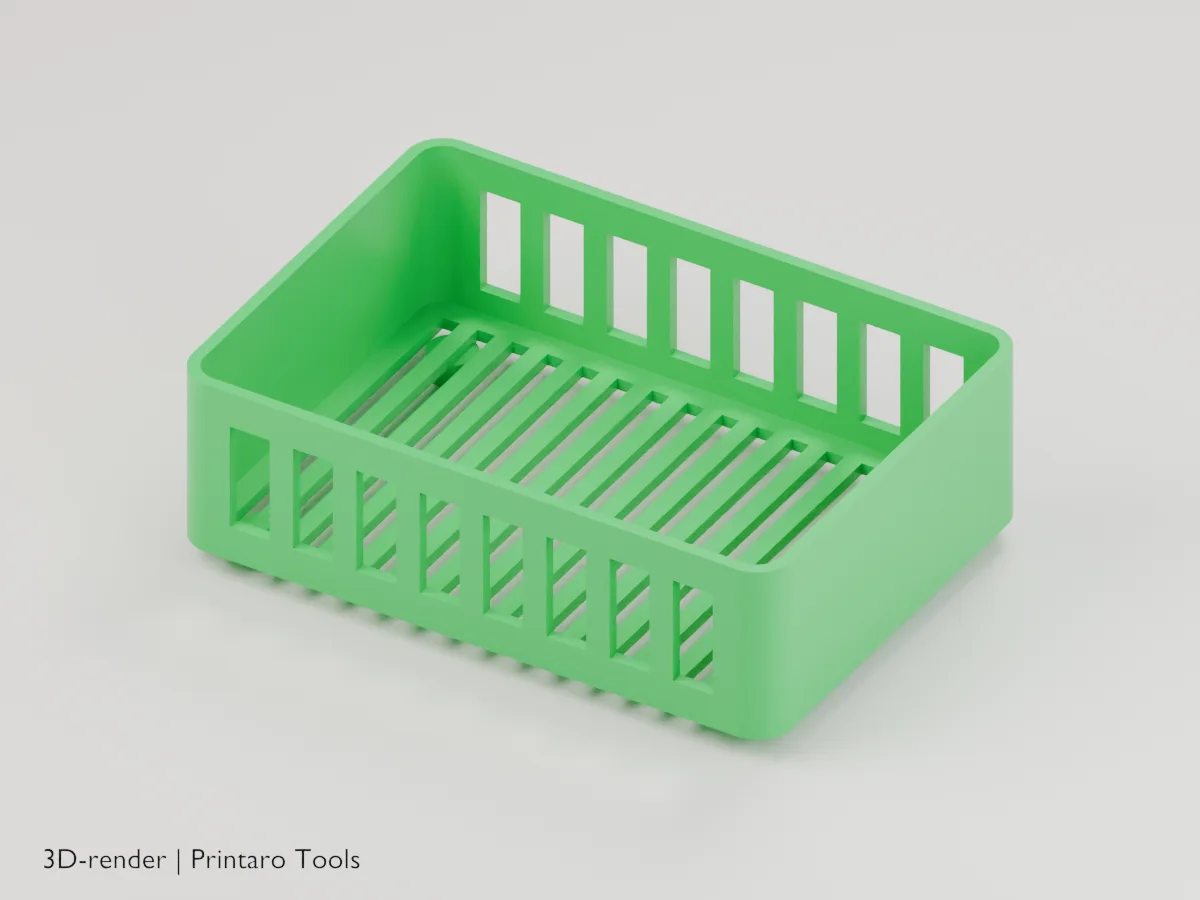
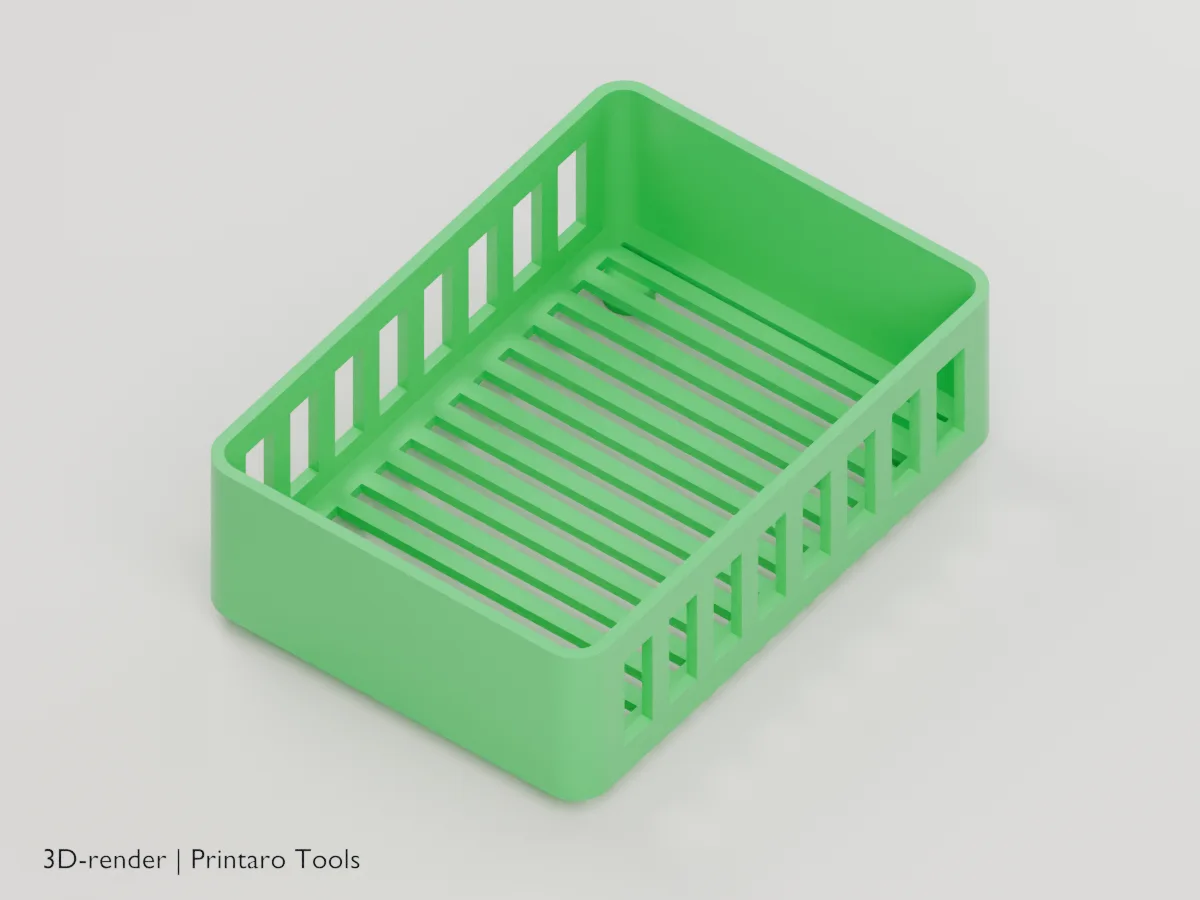
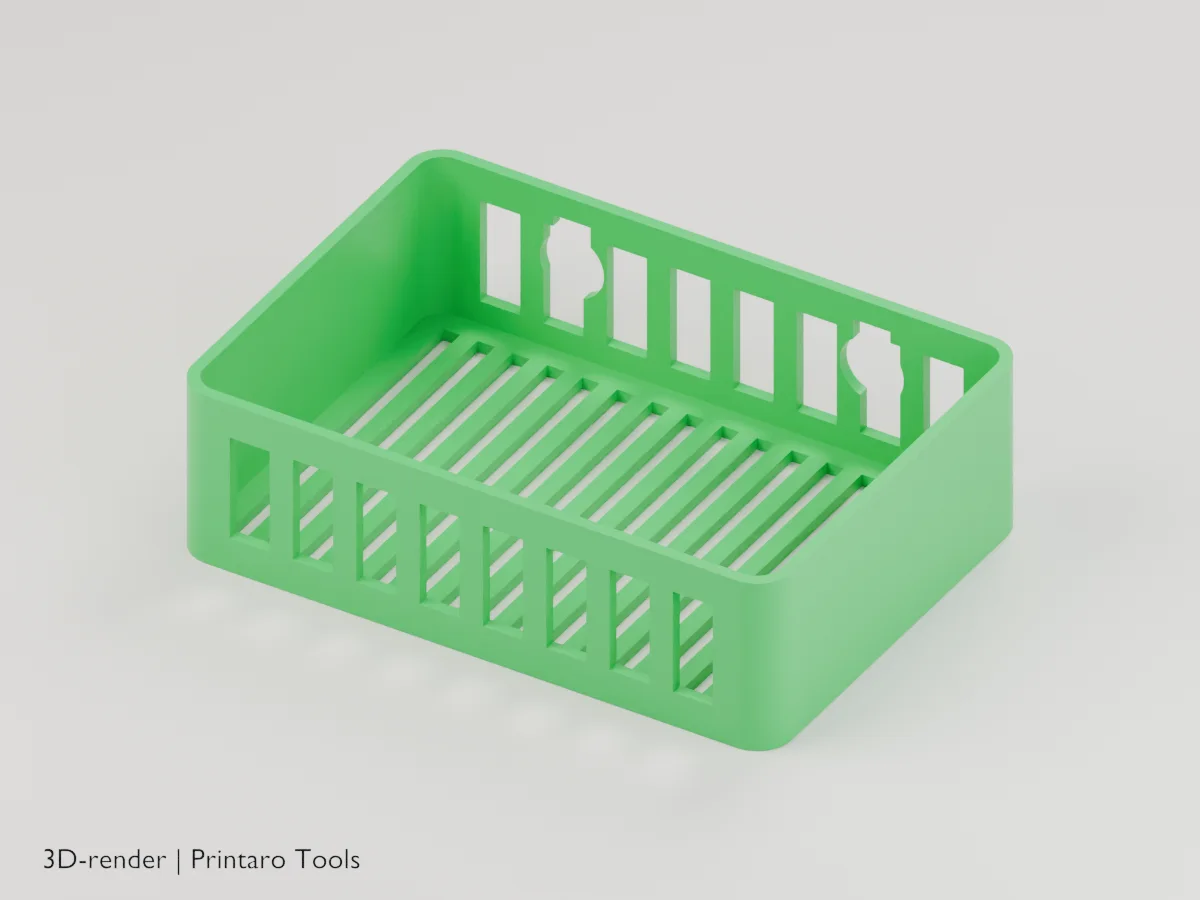
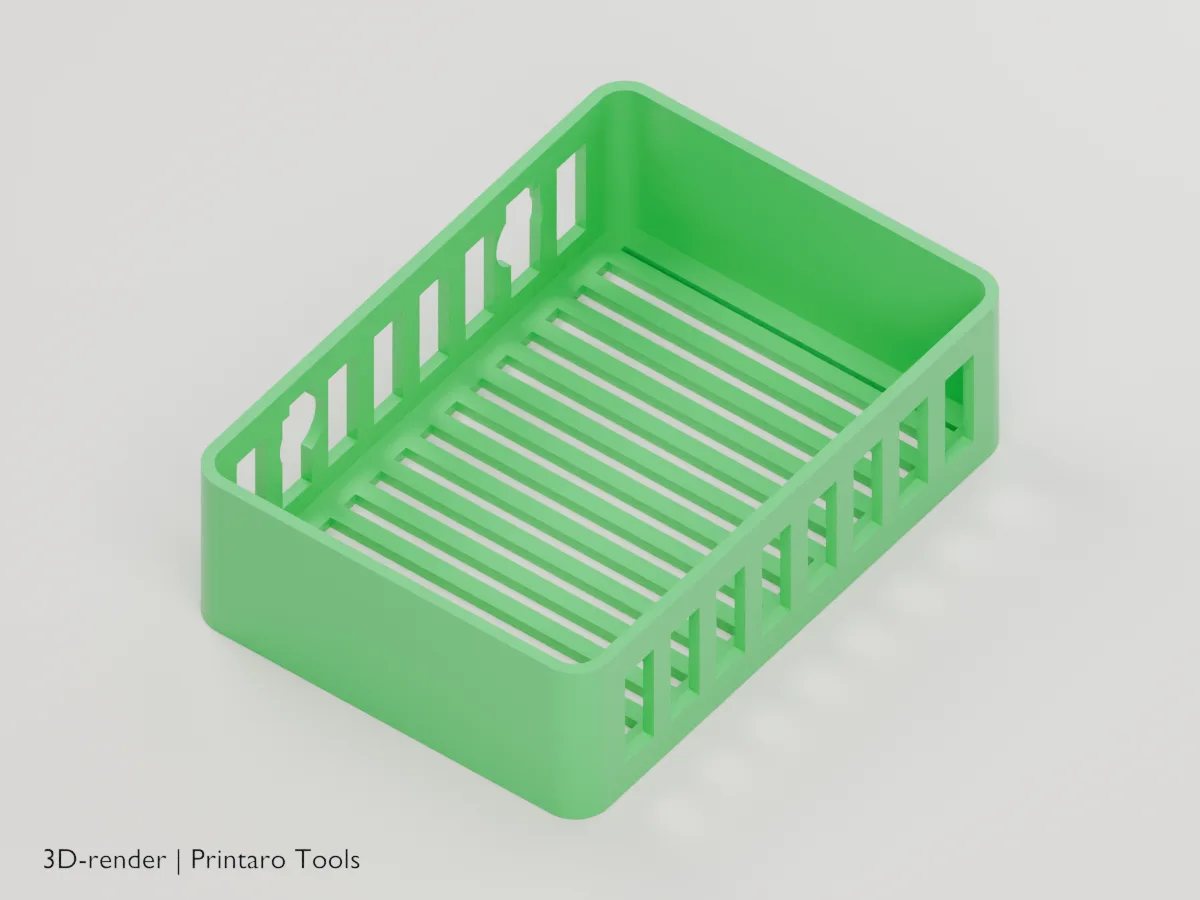
Examples made with this generator. These are 3D renders, not photos of prints.
No printer?
Printaro can print this design for you. Copy the link to your design and paste it in your message, so we know exactly which settings you chose.
Want your own printer? See which Bambu Lab printer to buy.
Keep the tools free
Found this useful?
These generators are free to use. If one saved you time, a small Ko-fi donation helps pay for hosting, rendering and new tools.
About this generator
An open basket that lets a sink sponge drain and dry: slotted floor and sides, on feet or on suction cups.
How to use
- Measure your sponge.
- Pick feet or suction cups.
- Print upright as exported.
Sizing it to your sponge
Enter the size of the sponge itself. The tool adds 2 mm of room on each side, then the walls: a 95 × 65 mm sponge with 2 mm walls gives a basket of 103 × 73 mm. A wet sponge swells, so measure one that has been used.
Height sets how tall the basket is. The openings in the long sides get shorter along with it, and at the lowest setting of 15 mm they are only about 3 mm tall. Keep it at 25 mm or more if you want the sides to drain as well.
Feet or suction cups
- Feet: four 8 mm feet lift the floor 4 mm, so water can run out of the 3 mm slots and away underneath. Put it where it can drain, not on a surface that stays wet.
- Suction cups: the feet go and two keyholes appear in the back wall, each an 11 mm hole with a 6.4 mm slot. They suit cups with a 6 mm button head. Suction cups need a smooth tile or glass surface.
Printing tips
- PETG resists dish soap and hot water better than PLA.
- Rinse it now and then.
Helpful guides
Frequently asked questions
How does it hang?
With Suction under Mounting, the back wall has keyhole slots for suction cups.
Which filament should I use?
PETG. It resists dish soap and hot water better than PLA.