Door Stop
Wedges that keep doors open
Measure the gap under your door and make the wedge a little taller than that.
Examples
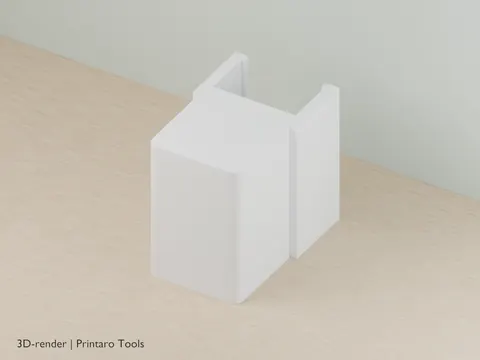
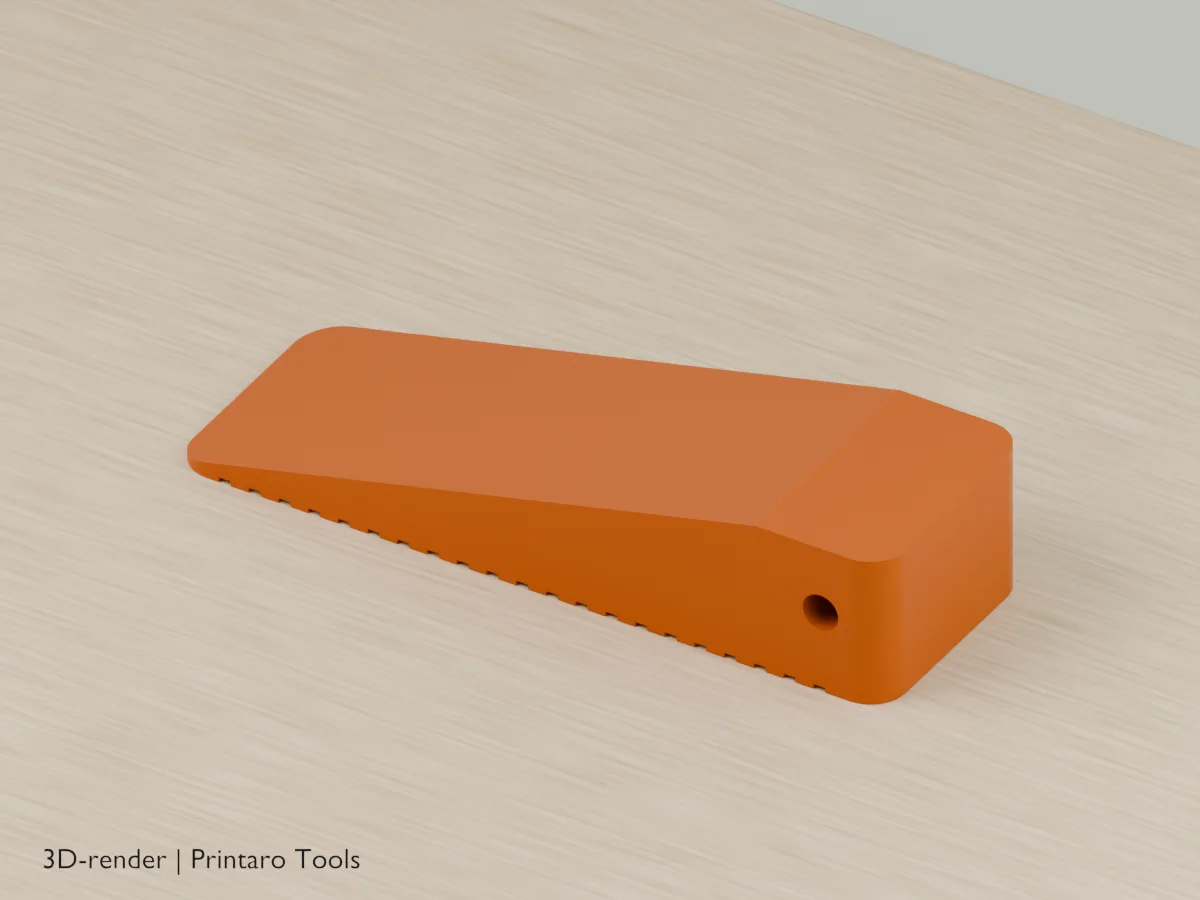
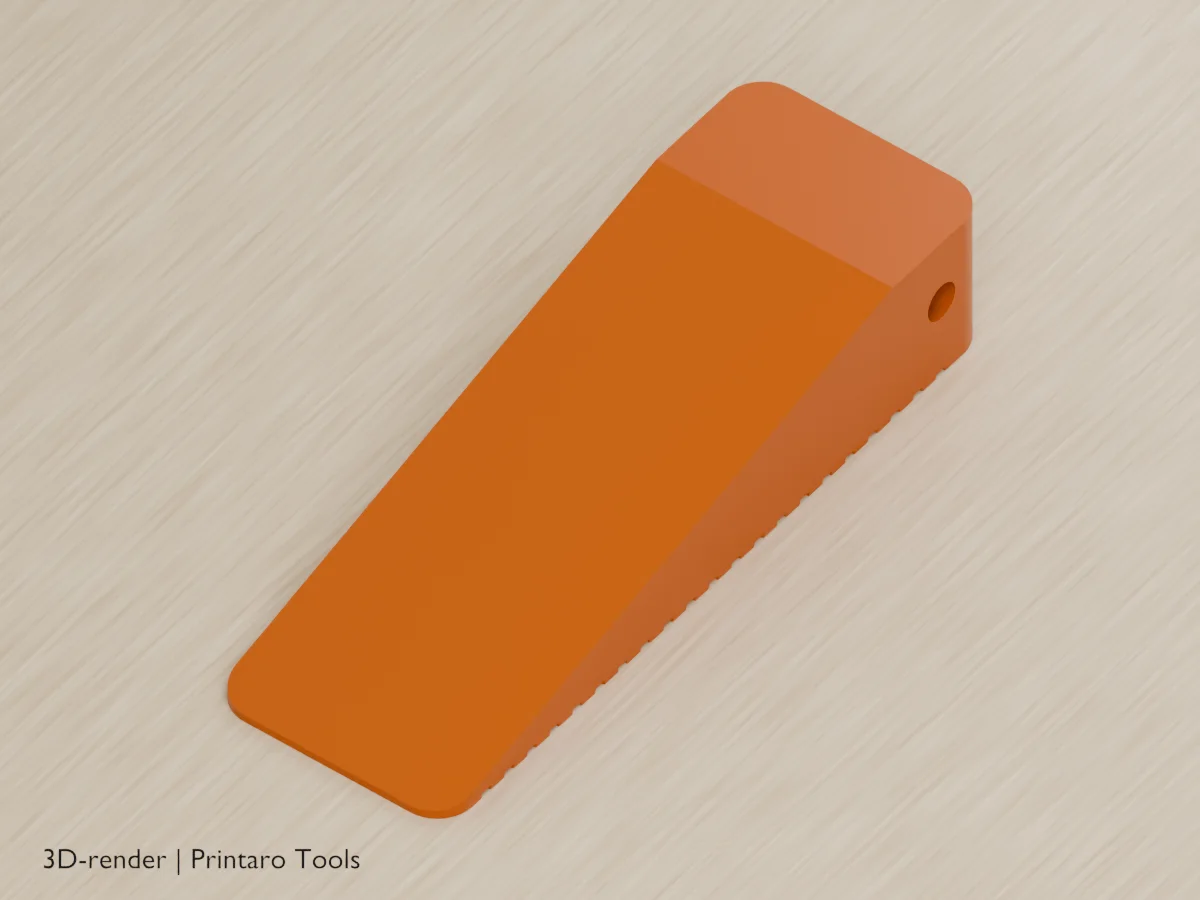
Examples made with this generator. These are 3D renders, not photos of prints.
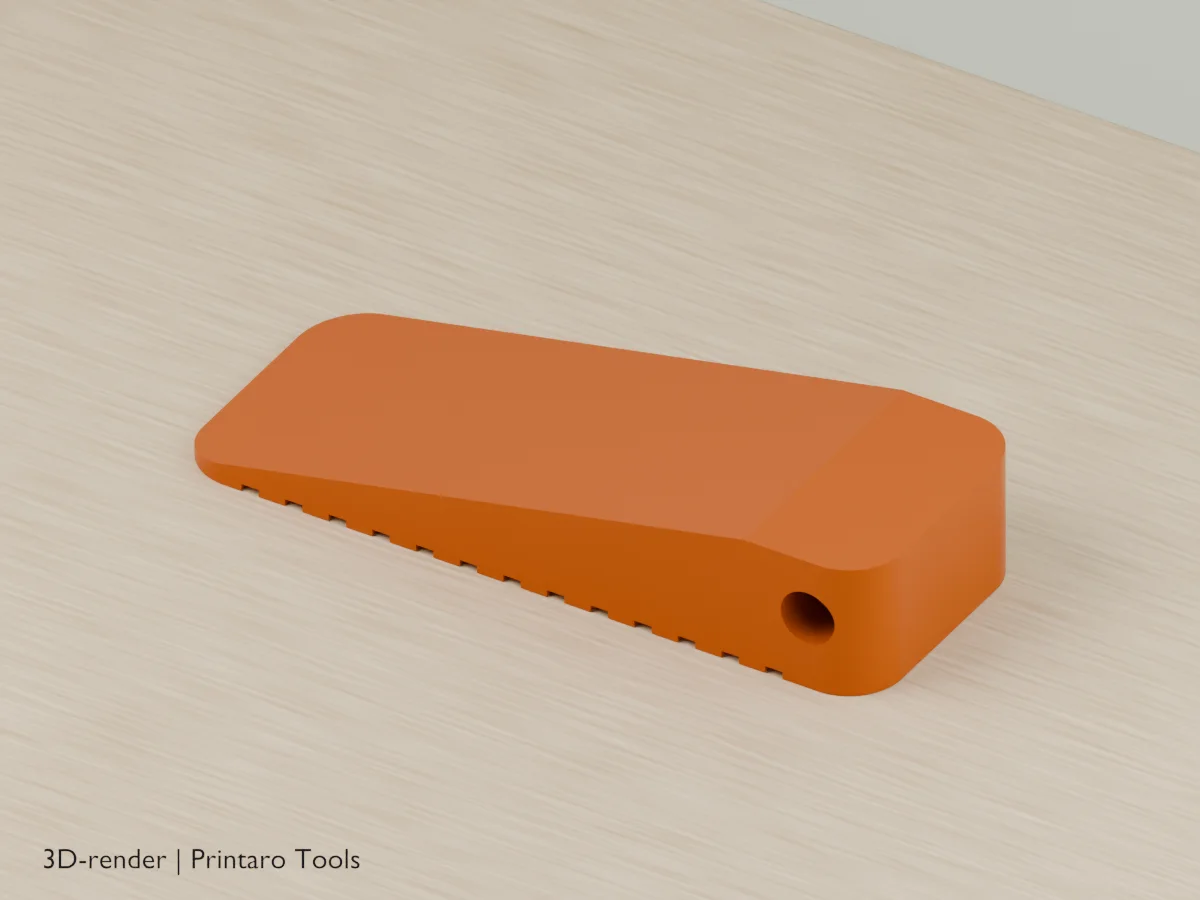
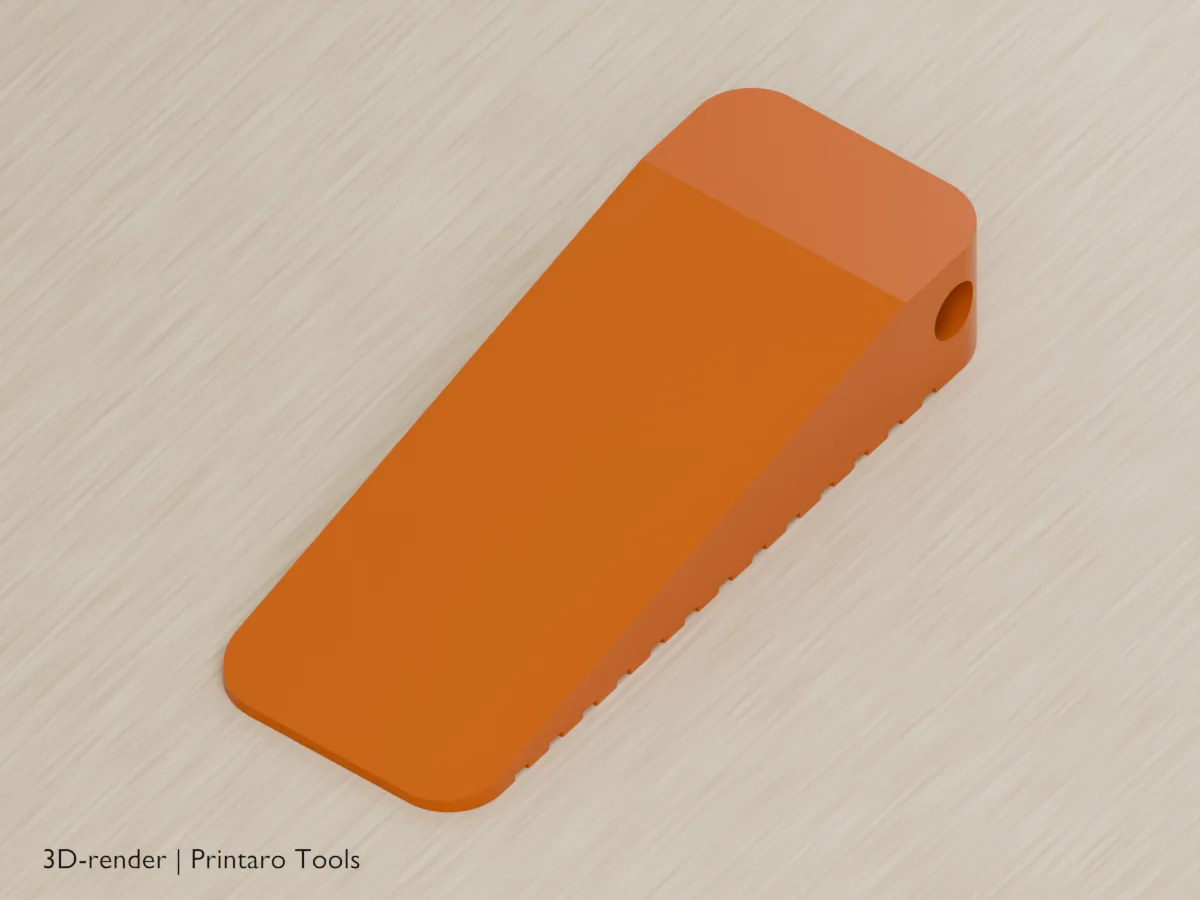
No printer?
Printaro can print this design for you. Copy the link to your design and paste it in your message, so we know exactly which settings you chose.
Want your own printer? See which Bambu Lab printer to buy.
Keep the tools free
Found this useful?
These generators are free to use. If one saved you time, a small Ko-fi donation helps pay for hosting, rendering and new tools.
About this generator
A wedge door stop with grip grooves underneath and an optional hole for hanging it on a hook.
How to use
- Measure the gap under the door.
- Set the height to at least twice the gap.
- Print it lying flat.
Height and slope
The wedge starts at 1.2 mm so it slides under a door, and rises to Height with a flat section at the thick end. It holds where its slope reaches the bottom of the door, so Height has to be higher than the gap. Twice the gap gives a margin for doors that hang unevenly.
A flatter wedge holds better than a steep one. As a rule, keep Length at least four times Height. The defaults (120 mm and 25 mm) and the High gap preset (160 mm and 40 mm) both do.
Floors
- Tile and hardwood: TPU grips far better than hard plastic. See how to print TPU.
- Carpet: PLA and PETG work, and the grooves under the wedge help.
- Grooves: 0.8 mm deep, 2 mm wide and 5 mm apart. They need a good first layer to come out clean.
Heavy doors
Solid wedges use a lot of filament, and a low infill can crush at the thin end. Add walls for strength. The 6 mm hanging hole goes across the thick end, so you can keep the wedge on a hook near the door.
Printing tips
- TPU gives the best grip on smooth floors.
- PLA and PETG work fine on carpet.
Helpful guides
Frequently asked questions
How high should it be?
A bit higher than the gap under the door, so the wedge jams when you push it in.
Which filament grips best?
TPU grips best on smooth floors. PLA and PETG work fine on carpet.