Packaging and shipping 3D prints without breakage
How to pack thin, fragile and moving printed parts, how to keep shipping costs down, and what to check before a parcel leaves.
Updated 2026-11-05
What breaks in transit
Printed parts are light and strong in some directions, but weak across their layers. Thin parts that stick out, such as hooks, wings, tips and lettering on a sign, break first. Moving parts can jam if they are squeezed, and large flat parts can bend if a heavier parcel lies on top.
Packing fragile prints
- Wrap the item so nothing can move in the box. A print that slides around hits the walls with every bump.
- Support thin parts from both sides, for example with a piece of card or foam, instead of only wrapping them.
- Use a box rather than an envelope for anything thicker than a few millimeters. A padded envelope protects against scratches, not against pressure.
- Leave at least a couple of centimeters of padding between the item and every wall of the box.
- Pack sets so that the pieces can't touch each other, for example in separate small bags.
Moving parts
Print-in-place items such as articulated figures and flexi names should be shipped with every joint already freed and checked. Pack them stretched out or curled loosely, not folded under pressure. A short note on how to bend them gently prevents broken joints at the customer's end. See print-in-place parts.
Keeping the cost down
Shipping is priced by weight and size, and the step between two size classes can be larger than the price of a small item. Weigh and measure a packed item before you set the shipping price. Flat items that fit a letterbox-sized parcel are much cheaper to send than a box, so design and pack with that in mind where you can.
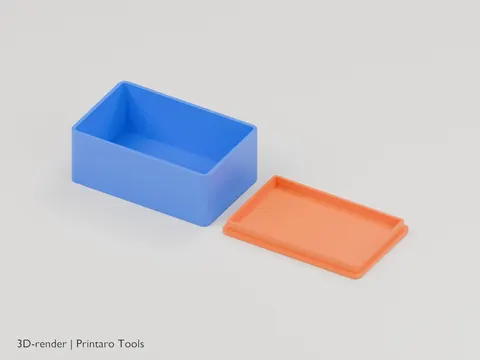
You can also print your own packaging: a custom box sized to the product protects it, looks good and is part of the gift. It adds print time and filament, so count it in the cost.
Before it leaves
- Check the item once more: no strings, no brim left, correct spelling, right color.
- Put a small note in the box with care instructions, such as keeping PLA out of hot cars and dishwashers.
- Add your contact details. In the EU, the product safety rules ask for your name and address on the product or its packaging when you sell under your own name.
- Keep a photo of the packed item, which helps if a parcel arrives damaged.
- Use tracked shipping for expensive items, and for buyers you don't know.